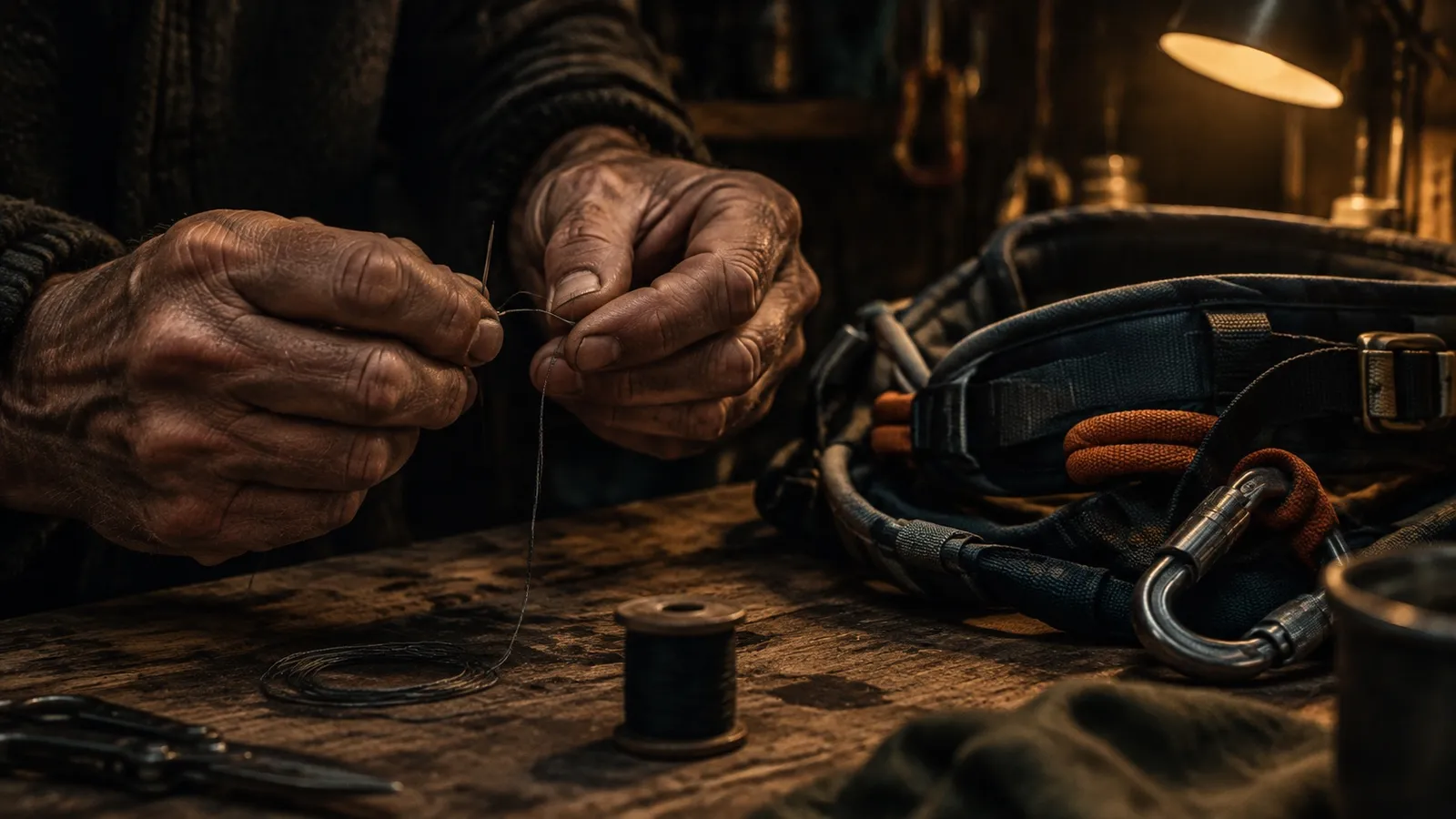
A man’s shoulders tell the reader how much he can carry. They don’t say what he’s afraid to set down.
M/M romance inherited two templates for men, and neither one was built for it. The first came from heterosexual romance, the towering, emotionally sealed hero who exists to be cracked open by love. The second came from mainstream culture’s stereotypes of gay men, the effeminate best friend whose job is to be funny and harmless. Many M/M books try to escape the second template by doubling down on the first, and the result is a love story between two men built from the same kit of jaw and clipped sentences. They’re masculine in identical ways, and neither has an inner life.
Changing a man’s body type won’t fix the problem. Masculinity on the page works best as a set of choices a man makes under constraint, shaped by where he grew up, what he does for a living, what he fears, and what the men around him rewarded or punished. Stereotypes braid those strands into a single rope. Writing masculinity well means unbraiding them, so that a man’s physical confidence, his emotional confidence, his work, his sexual preferences, and how he moves through a room can each be decided on its own.
This essay works through those strands. It draws on research and theory about masculinity, and it uses my own novels where they show a strand at work. None of it prescribes what a man in a romance must be.
Masculinities, plural
The sociologist Raewyn Connell changed how scholars talk about men by insisting on the plural. In Masculinities, Connell describes several patterns of masculinity existing at once and arranged in a hierarchy. At the top sits what Connell calls hegemonic masculinity, the culturally honored version of manhood that most men never fully embody but still measure themselves against. Below it sit subordinated masculinities, and Connell names gay masculinity as the clearest example.[1]
A later reassessment by Connell and James Messerschmidt stressed that the honored version changes with the setting. What counts as a real man in a steel mill differs from what counts in a law firm or a barracks, and men move between those local standards all day.[2] The sociologist Eric Anderson has argued that as cultural fear of being seen as gay declines, young men show far more physical and emotional closeness with each other, which means the rules of masculinity loosen and tighten with the climate around them.[3]
For a novelist, the plural is a gift. Every setting in a romance has its own honored version of manhood, whether it’s a firehouse, a hockey locker room, a figure skating rink, a ranch, or a trading floor. A character’s masculinity is his relationship to that local standard. He can meet it, perform it, resist it, or fail it in public. Two men in the same romance can stand in different relationships to the same standard, and that difference generates more friction than any contrast in height.
Physical confidence isn’t emotional confidence
The stock hero has both kinds of confidence in equal measure. He moves through the world like he owns it and handles his feelings with the same ease once love unlocks them. Real men often have one kind without the other, and the gap between them is where character lives.
In Ice and Gravity, Cole is an elite figure skater, a man whose sport demands enormous strength and discipline while popular culture still dismisses it as delicate. His body does what he asks of it until the day in competition when it doesn’t, and he’s sent to a remote facility in Alaska to recover. Cole’s command of his body is total, but what he feels is another matter, and the novel lives in that distance.
Here’s a stock version of a strong man.
Teague was all hard muscle and quiet strength. He didn’t do feelings. When Nils touched his arm, he growled and pulled him close.
Here’s a man whose physical confidence and emotional confidence point in different directions.
Teague could climb a pole in an ice storm and splice a live line by feel, and in nineteen years with the electric co-op he’d told nobody that he hated heights. Nils had watched him check his harness three times when once would do. On the fourth night of the outage, Nils climbed into the cab of the bucket truck with two coffees and asked how long he’d been afraid of falling.
The second Teague is more masculine than the first by any honest measure. He climbs anyway. The fear doesn’t shrink him, and the man who sees it doesn’t treat it as a weakness to exploit. The scene gets its charge from the gap between what Teague’s body can do and what he’s been willing to say.
What his work makes of him
Work shapes a man’s masculinity more than most romances admit. It teaches him what competence looks like and which feelings are allowed on shift. A paramedic learns calm as a performance before it becomes a habit. Lawyers argue for a living and have to unlearn the habit at home, and soldiers learn that the unit’s needs outrank their own.
The military shows this most starkly, and it’s the world I know best. In Rain by Midnight, a soldier serving under Don’t Ask, Don’t Tell risks the life he’s hidden when a contractor sees too much. Under that policy, concealment was part of a gay soldier’s professional survival, so his competence and his secret were bound together. I’ve written about how the chain of command creates the stakes in military romance in Writing the Lives Between Duty and Desire.
The craft move is to let the job supply a man’s masculine vocabulary and then show where the vocabulary fails him in love. A firefighter knows how to walk into a burning building and has no idea how to walk into his boyfriend’s family Christmas. A rancher can read weather from a cloud bank and can’t read a man who’s hurt and pretending otherwise. The work gives him his strength. The romance finds the place where that strength stops working.
Vulnerability without emasculation
Many writers worry that a masculine character who shows fear or grief will stop reading as masculine. The worry usually rests on an unstated equation in which vulnerability means femininity and femininity means losing status. The psychologist Joseph Pleck called the cost of living inside such equations gender role strain. Men who violate masculine norms expect to be penalized, and men who conform pay costs of their own in isolation and suppressed feeling.[4] A romance can dramatize that strain instead of obeying it.
The fix isn’t to keep a man from being vulnerable. It’s to let him be vulnerable in his own idiom. A man who doesn’t cry easily might show fear by handing over something he can’t take back, a key or a secret. The other man’s response matters as much as the disclosure. If he treats the moment as a crack in the armor to be pried open, the scene turns into a contest of status. When he receives it as trust and gives something back, the scene shows two men who are both stronger for it.
Teague handed Nils the spare key to his truck, which nobody had ever driven but him, and said it was for the next ice storm. It was July.
Nothing in that exchange requires Teague to stop being who he is. He’s vulnerable without being emasculated because the vulnerability arrives in his own language. For more on making a restrained man’s feeling legible through action and timing, see The Man Who Never Says What He Means.
Who tops tells you nothing about who he is
M/M romance absorbed a second inheritance from heterosexual romance, the habit of mapping sexual roles onto social ones. In too many books the bigger, older, richer, more dominant man tops, and the shorter, younger, gentler man bottoms, as though the bedroom had to reproduce the hero and heroine of a 1980s paperback. Readers see the pattern coming, and many are tired of it.
Sexual preferences don’t follow height or income. A man who runs a construction crew may want to give up control in bed. A shy archivist may know exactly what he wants and ask for it. Plenty of men are versatile, and plenty change with the partner and the night. When a book uses position as shorthand for personality, it flattens both men, and it implies that receiving makes a man less of one.
Decide a character’s sexual preferences as their own trait, separate from his job and his size, and let the bedroom contradict the boardroom whenever that’s true to him. The contradiction often reveals more than the confirmation would. My essay Submission and Control covers how to keep consent visible when control becomes part of the erotic dynamic, which matters even more once roles stop following the expected lines.
The effeminate man isn’t a punchline
Stereotypes about effeminacy don’t only come from outside gay culture. In a survey of 751 gay men in the United States, Francisco Sánchez and Eric Vilain found that many wished their own behavior were more masculine and less feminine than they believed it to be, and a majority preferred stereotypically masculine partners. The men most preoccupied with masculinity and most critical of effeminacy also reported more negative feelings about being gay.[5]
Romance can reflect that pattern or reproduce it. A book that reserves its effeminate characters for comic relief, or uses a man’s gestures and wardrobe as a signal of his sexual role, reproduces it. Writers can instead put a gender-nonconforming man at the center of the love story with full dignity and full desire, or let a hypermasculine hero’s contempt for effeminate men show the reader what he’s afraid of in himself. Both choices take masculinity seriously. The first lets the reader see more kinds of men. The second turns a stereotype into a character flaw the romance can address.
Gender expression is its own strand. A man can wear eyeliner and repair diesel engines. He can be shy in a crowd and ruthless on a court. Treating expression as one more decision, rather than as a package deal, lets writers build men no stereotype could predict.
Building a man with an inner life
The table below separates the strands stereotypes tend to bundle.
| Strand | Stereotype shortcut | A man with an inner life |
|---|---|---|
| Body | Size and muscle stand in for character. | His body is a tool, a history, or a liability, and he has feelings about it. |
| Emotion | He doesn’t feel until love unlocks him. | He feels plenty and has rules about what he shows, and the rules have a source. |
| Work | His job is set dressing. | His job taught him what competence means and where his strength runs out. |
| Sex | Position matches personality. | His preferences are his own and may contradict his public persona. |
| Expression | Masculine or effeminate, chosen once. | He combines traits in ways that surprise the reader and stay consistent with him. |
| Fear | Heroes aren’t afraid. | He fears something that’s his alone and acts in spite of it. |
Then ask a few questions of each man before drafting. What does manhood mean in the world he comes from? Where does he meet that standard, and where does he fail it? Who taught him the rules, and what did breaking them cost? What would he never let another man see, and what does the other man see anyway? The answers will rarely match a stereotype, because stereotypes are what writers reach for when they haven’t asked.
Science fiction romance can push the questions further by testing a man against rules that aren’t Earth’s. In Claimed by the Ninth Orbit, a scientist who came to disprove reports of bonding meets Kael on a black-glass planet, and a man whose identity rests on skepticism has to face something his training can’t explain. Taking the setting off-planet strips away the local standard and shows how much of a man’s certainty he borrowed from it.
Masculinity in M/M romance doesn’t need protecting from vulnerability or from effeminacy. It needs to be built one man at a time. Give each man his own relationship to strength, and let the two relationships collide. The love story will be stronger for it, and so will the men.
Frequently asked questions
How do you write a masculine gay character without stereotypes?
Separate the traits stereotypes bundle together. Decide his physical confidence, emotional confidence, occupation, gender expression, and sexual preferences independently, and ask where each comes from. Give him a relationship to the version of manhood honored in his world, whether he meets it or resists it, and let his vulnerability arrive in his own idiom.
Do both men in an M/M romance have to be masculine?
No. Romances can pair two traditionally masculine men, two gender-nonconforming men, or one of each. What matters is that each man has his own relationship to masculinity. Contrast works best when it comes from how the men handle fear and work, not from casting one as the hero and the other as the heroine.
Does the top have to be the more masculine character?
No. Sexual preferences don’t follow size or income, and many men are versatile. Mapping position onto personality is a habit M/M romance borrowed from heterosexual romance, and it flattens both characters. Decide sexual preferences as a separate trait and let them contradict a man’s public persona when that’s true to him.
What is hegemonic masculinity, and why should romance writers care?
Hegemonic masculinity is the sociologist Raewyn Connell’s term for the culturally honored form of manhood in a given setting, a standard most men measure themselves against without fully meeting it. Writers can use it to build character. Every setting has its own honored version, and a man’s relationship to it supplies motive and room to change.
How can a masculine character show vulnerability without seeming weak?
Let vulnerability arrive in his own language. A guarded man might show fear through an action he can’t take back, such as handing over a key or a secret, rather than through a speech. The other man’s response matters too. Received as trust, vulnerability makes both men read as stronger.
Sources
These works inform my craft argument; none is offered as proof of how a fictional man must think or behave. The survey research describes real men in limited samples, which fiction draws on for its own purposes.
- R. W. Connell, Masculinities, 2nd ed. (University of California Press, 2005), WorldCat, https://search.worldcat.org/search?q=Masculinities+Connell. ↩
- R. W. Connell and James W. Messerschmidt, “Hegemonic Masculinity: Rethinking the Concept,” Gender & Society 19, no. 6 (2005): 829–59, https://doi.org/10.1177/0891243205278639. ↩
- Eric Anderson, Inclusive Masculinity: The Changing Nature of Masculinities (Routledge, 2009), WorldCat, https://search.worldcat.org/search?q=Inclusive+Masculinity+Anderson. ↩
- Joseph H. Pleck, The Myth of Masculinity (MIT Press, 1981), WorldCat, https://search.worldcat.org/search?q=The+Myth+of+Masculinity+Pleck. ↩
- Francisco J. Sánchez and Eric Vilain, “‘Straight-Acting Gays’: The Relationship Between Masculine Consciousness, Anti-Effeminacy, and Negative Gay Identity,” Archives of Sexual Behavior 41, no. 1 (2012): 111–19, https://doi.org/10.1007/s10508-012-9912-z; also indexed on PubMed, https://pubmed.ncbi.nlm.nih.gov/22323055/. ↩