
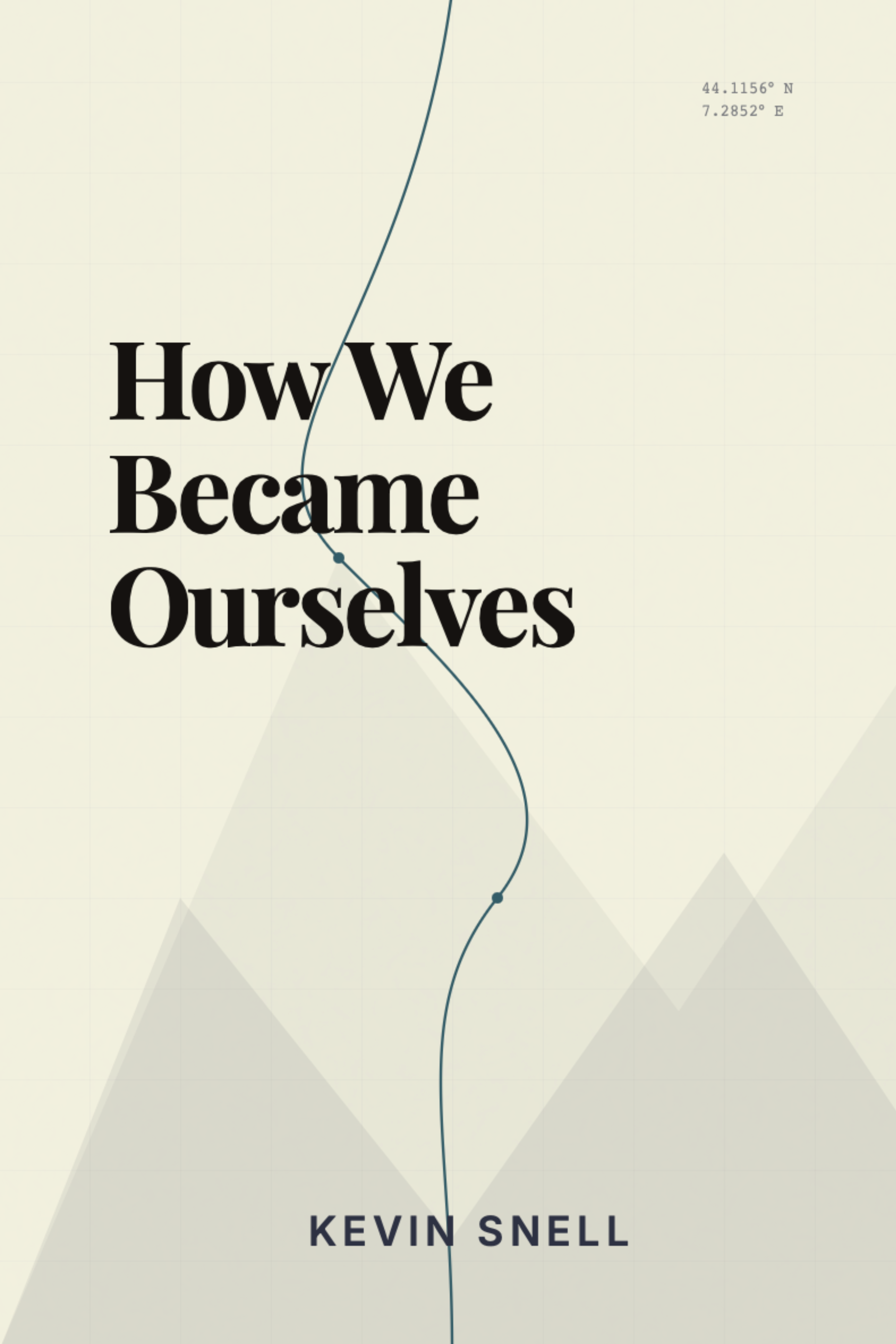
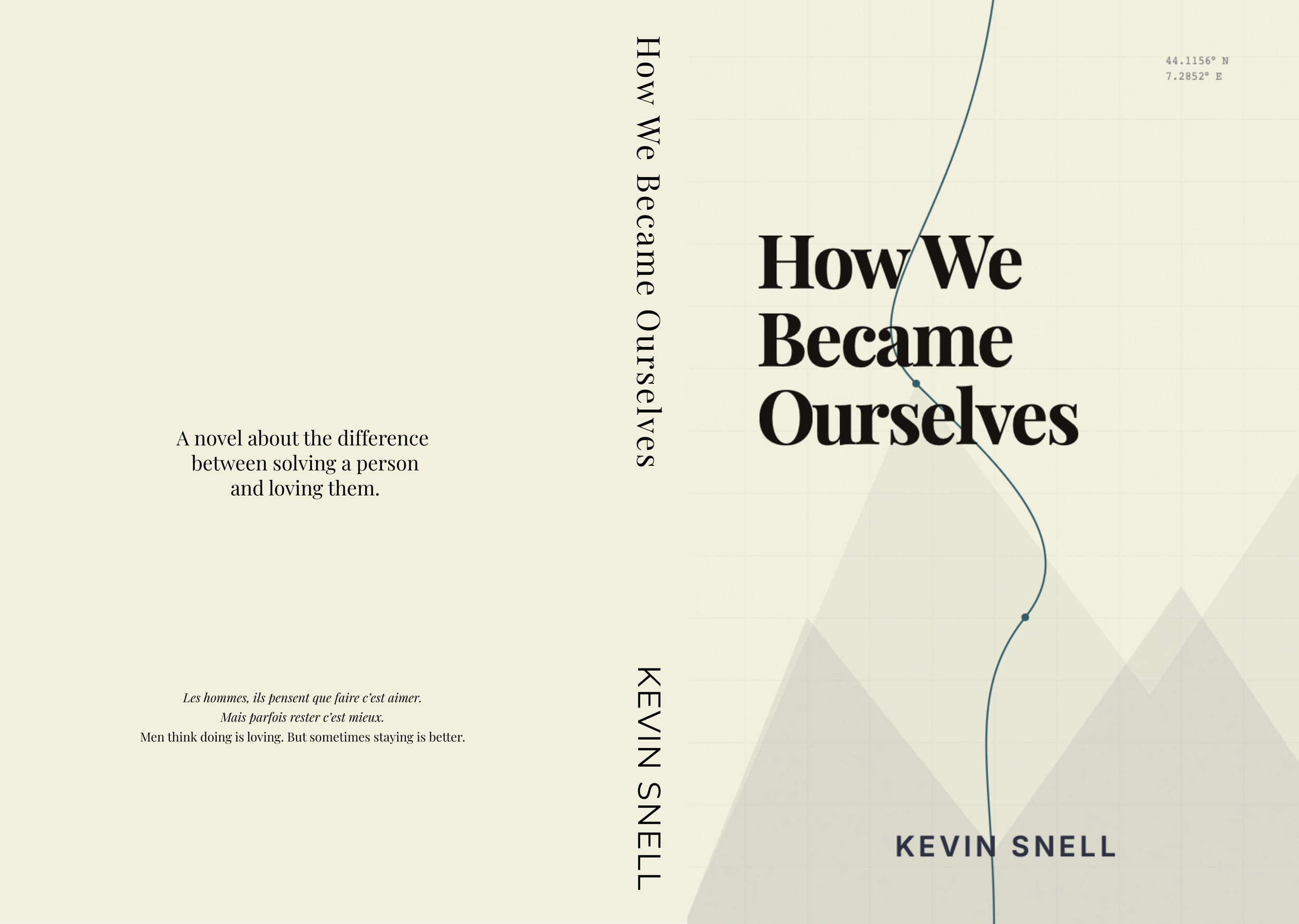
How We Became Ourselves
Les hommes, ils pensent que faire c’est aimer.
Mais parfois rester c’est mieux.
How We Became Ourselves examines the slow and often uncomfortable reshaping of identity within intimacy.
Through proximity rather than revelation, two lives begin to alter one another in ways neither fully intends.
This is a novel about restraint, emotional precision, and the quiet evolution of self.
Oliver Harding does not believe in collapse. He believes in systems. In data. In preparation. When his divorce is finalized and his job quietly disappears within the same week, he does what he has always done in moments of uncertainty: he makes a plan.
The plan is simple. He will walk.
From the Mediterranean to the high passes of the Mercantour, Oliver sets out alone, equipped with good boots, precise maps, and a mind accustomed to control. The trail is less interested in control. Heat, altitude, and distance begin to do what grief could not: they interrupt him. They slow him. They insist on the body.
By the time he meets Julien, a French mountain guide whose quiet competence unsettles more than it reassures, Oliver has learned how to endure the mountains. He has not yet learned how to be seen inside them. What develops between them will ask for something Oliver has never practiced: staying visible when it costs him.
Set against the vast geometry of alpine valleys and stone refuges, How We Became Ourselves is a restrained, intimate novel about competence and vulnerability, about the difference between movement and change, and about the long, difficult work of allowing another person to witness who we are without performance.
More Reading
-
![Fog-covered pine forest at dusk viewed from a rain-dark wooden deck railing, with layered evergreen silhouettes and the title “Rain By Midnight” in white uppercase lettering.]()
Rain By Midnight
-
![Still Life with Fugue book cover by Kevin Snell featuring minimalist classical design elements]()
Still Life With Fugue
-
![Ice and Gravity book cover by Kevin Snell featuring a dark circular center surrounded by fractured ice patterns on a pale background.]()
Ice and Gravity