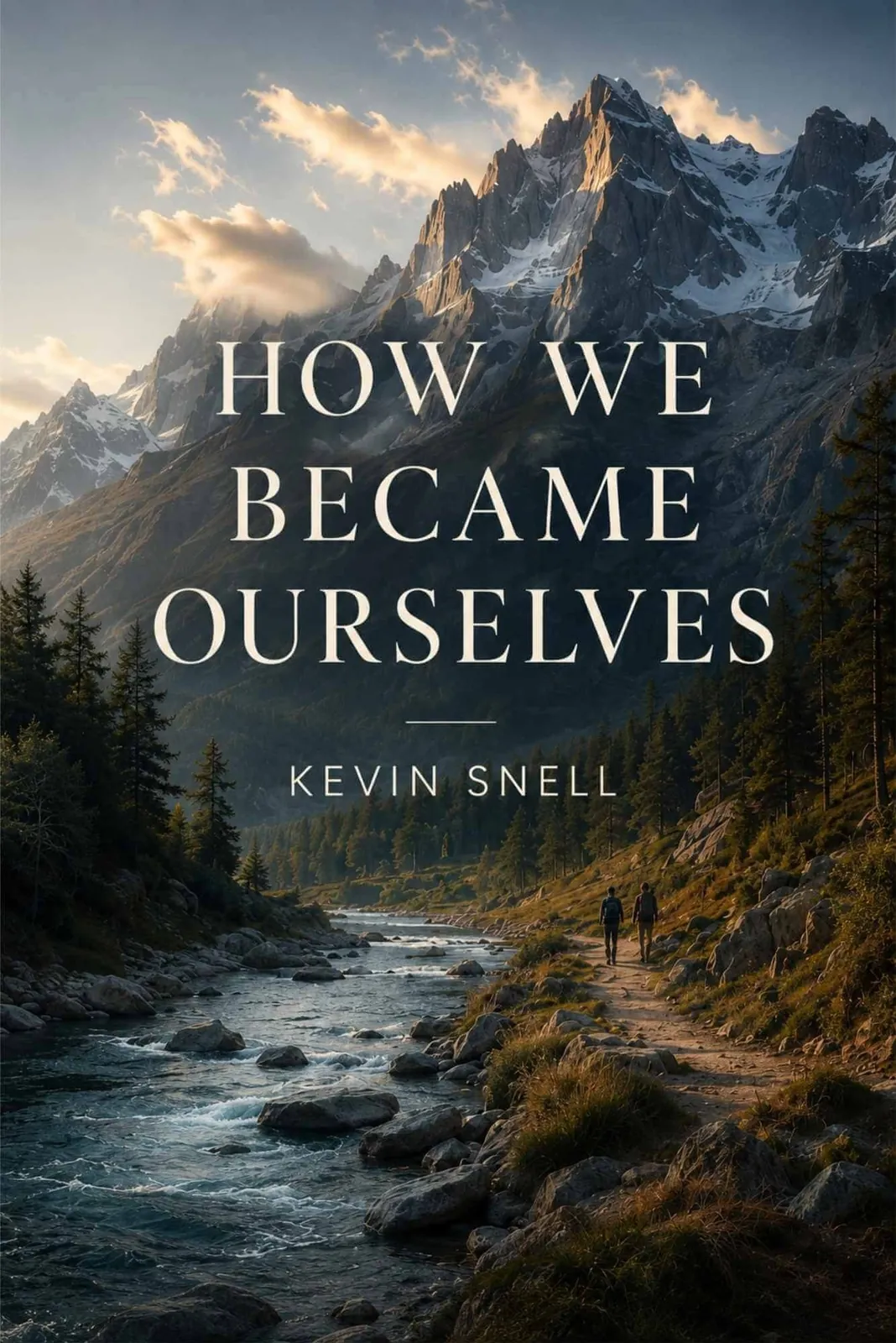
How We Became Ourselves
Divorced and newly unemployed, Oliver walks from Nice into the Alps and learns the difference between surviving a life and inhabiting it.
A literary novel about divorce, solitude, attention, and the quiet work of becoming real to yourself.
His marriage ended on a Tuesday. By nightfall, he was already gone.
Oliver has always understood systems—tea steeped for exactly three minutes, work built on architecture, logic, and control, a marriage managed with the same quiet precision he brings to everything else. Then the letter arrives and the divorce is final, and hours later his role is eliminated too. By evening, Oliver has packed one bag, locked the door to his London flat, and booked a flight to Nice. He has no return ticket and no full plan, only a walking route that begins in the south of France and climbs north through mountains he’s only ever studied from a distance.
He tells himself he’s going for a walk. But the trail has its own intelligence—blisters, weather, silence, strangers, mountain passes, and the slow physical correction of a life lived mostly in the mind. What Oliver finds isn’t escape. It’s attention. And step by step, through pain and solitude and the unfamiliar grammar of being present, he learns that a life doesn’t become his simply because he’s survived it. He has to learn how to inhabit it.
A man at the end of one life. A trail that teaches him how to begin another.
Oliver’s life doesn’t collapse dramatically. It’s dismantled with paperwork—a decree absolute, a severance email, a flat that no longer feels like it belongs to anyone. For years he’s lived through structure, through marriage and work and routine and restraint. He knows how to solve problems, manage systems, and reduce uncertainty into something measurable. What he doesn’t know is how to be lost without immediately trying to repair the condition.
France doesn’t offer him answers. It offers terrain—the Mediterranean at dusk, a pack heavy on his shoulders, boots that haven’t been broken in, blisters that can’t be solved and can only be carried. Villages, refuges, strangers, mountains, and weather return him slowly to a body he’s spent years treating like equipment. As Oliver walks north, memory begins to loosen—his marriage, his father, his mother, and the fidelities and failures that shaped him before he knew they were shaping him.
This is a novel about solitude that isn’t emptiness. It’s a story about presence, attention, and the difficult mercy of discovering that becoming yourself isn’t a revelation. It’s practice.
How We Became Ourselves is literary, upmarket fiction about a divorced, newly unemployed man walking north through France into the Alps. The walking does the work the marriage and the job never asked of him—it returns Oliver to his body, teaches his attention where to rest, and turns solitude from a verdict into a practice.
The book begins with a divorce letter—and a man who doesn’t yet understand that leaving isn’t the same as becoming.
More by Kevin Snell
More Books by Kevin Snell
Explore more literary fiction, M/M romance, supernatural romance, sci-fi romance, and emotionally intense stories about intimacy, restraint, desire, and men changed by the cost of being seen.