
What the Night Leaves
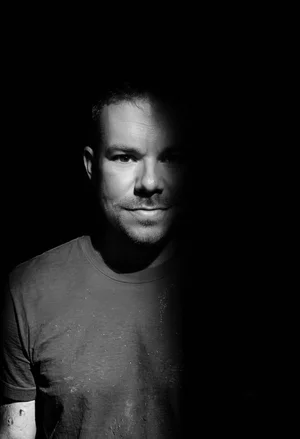
His name is Marcus and he opens the door in a gray t-shirt and bare feet and has the kind of face that, under different circumstances, I might have wanted to know.
I found him on an app at eleven on a Thursday in February. The city was sealed up cold, my apartment too quiet, my own head too loud. I knew what I was doing when I messaged him. I knew what I was doing when I got in the cab. That's the thing I can't give myself—the comfortable lie of not knowing. I always know.
He pours whiskey. We stand in his kitchen and do the minimum—where do you live, what do you do, the small conversational scaffolding that makes the rest of it feel less transactional. He has a tattoo on his left forearm I don't ask about. He asks if I want music and I say sure and he puts something on low and then we're not talking anymore.
His bedroom is orange from the streetlight through thin curtains. He undresses me slowly, which I don't expect, and it does something to my chest I don't want to name so I look past his shoulder at the wall and pay attention instead to the physical facts of him—the warmth of his hands, his mouth on my neck, the solid weight of him as he moves me where he wants me.
He takes his time. I usually don't let them take their time because it makes the thing feel like something it isn't supposed to be. But I'm tired tonight in a way that goes past the body and I don't stop him.
When he works me open with his fingers I press my face into the pillow and feel the familiar loosening—not pleasure first, something underneath pleasure, something that says you are here, this is real, you are not alone in your own body tonight.
He moves over me, his chest to my back, his mouth at my ear. There's a moment—there's always a moment, that half-second where it's still a choice—and I don't say anything and he doesn't reach for the nightstand and then the moment passes and he pushes into me slow and I exhale and let him in.
He fucks me like he has nowhere else to be. Unhurried, thorough, his hands finding my hips, my shoulders, the back of my neck. I keep my face turned because looking at him would make it mean something and I don't know what to do with things that mean something. I focus on the sensation instead—the stretch and heat of him, the specific reality of it, the proof.
When he comes I feel it happen. The warmth spreading through me, the pulse of it. I close my eyes and hold still and let it be what it is. Let it be enough. Someone was here and I'll carry it with me out into the cold and for a few hours it will quiet the thing in my chest that never entirely quiets.
He rolls beside me and we lie there and he says something I don't remember and I say something back. It's fine. It's the same as it always is.
I leave at one in the morning. Six blocks to the train. The city indifferent and lit up and cold. I stand on the platform and feel the particular peace of a man who got what he needed and didn't have to ask for it.
I don't know yet that in six weeks I'll be sitting on the edge of my bed staring at a white wall while a nurse tells me my results came back positive.
But I'm standing on the platform. The train is coming. For right now I'm just a guy going home.
. . .
The nurse says probably nothing twice.
I say okay, I say thank you, I hang up. I sit on the edge of the bed I painted the room around when I moved in because white felt like a reset, felt like a person who had things together. I look at the water stain near the ceiling I keep meaning to report.
Forty-eight hours. That's how long I sit with probably nothing before the second call.
This nurse's voice is different. Careful in the way that means I need you to hear me.
It wasn't a lab error.
She tells me clearly, without flinching. Gives me the information like it's mine to have. Tells me what comes next, what this means, what it doesn't. I take notes on my phone with a steadiness that surprises me. I say okay. I say thank you. I hang up.
I sit there for a long time.
The strange thing is I'm not surprised. I've been bracing for something for two years without naming what I was bracing for, and now it's here and the bracing is over and what's left is just the bare fact of it, sitting in the room with me, waiting to be looked at.
What the fuck have I been doing.
Not a question. Just a thing that arrives, fully formed, in my own voice, in the silence of the apartment.
I don't answer it. Not yet. I put on my coat and go for a walk and let the city be cold and indifferent around me and try to figure out who I'm supposed to tell first.
. . .
Marcus texts me on a Sunday morning three weeks after the diagnosis.
I've been doing the required work—the clinic visits, the conversations with my doctor, the grim administrative process of notifying recent partners through the health department because I don't have most of their numbers and don't remember all of their names. That's its own kind of reckoning, that list. Short and long at the same time.
His text says: hey. I heard from the health department. Can we talk?
I stare at it for a long time.
I think about not responding. I think about the clean exit, the handled-through-official-channels version where I never have to sit across from his honest face and be looked at. I've been taking clean exits for two years. I know exactly how they work and what they cost and I take them anyway.
I type: yes. When?
He says: tomorrow. There's a coffee place on Milwaukee. Can you do ten?
I say yes.
I put my phone down and sit with the particular feeling of a door I can't close back up.
. . .
He's already there when I arrive. Same gray t-shirt, different one. Bare forearms on the table, the tattoo I never asked about. He looks tired in a way that isn't just today.
I sit down. A server comes and I order coffee I won't taste. Marcus wraps both hands around his mug and looks at the table for a moment and then looks at me.
He says: I want to start by telling you I'm not angry.
I say okay.
He says: I need you to know that because what I'm about to say is going to sound like I am and I'm not. I'm just—he stops. Looks at his hands. Starts again. I've been doing a lot of thinking.
I wait. Outside on Milwaukee a bus goes past. The coffee place is warm and smells like roasting and someone at the counter is laughing at something.
He says: I tested positive two weeks ago.
The words land and I feel them land and I don't look away from his face. I owe him that much. I owe him that at minimum.
He says: I know it was me who didn't ask. I know that. I'm not putting this all on you. But I've been trying to understand why I didn't ask and I think—he pauses again, longer this time. I think I wanted to believe you wouldn't let it happen if it wasn't safe. Like there was some version of trust happening that made asking unnecessary. And that was stupid on my part. I know that now.
I say: it wasn't safe. I should have told you.
He nods. He's quiet for a moment.
Then he says: can I ask you something?
I say yes.
He says: did you know? Going in? That there was real risk?
The honest answer sits in my chest like a stone. I've been carrying it for three weeks, maybe longer, maybe for two years, and it's heavy in the specific way of things you know but won't say.
I say: yes.
He doesn't react the way I expect. He doesn't get angry. He just looks at me with those tired eyes and nods slowly, like I've confirmed something he already understood.
He says: so why.
Two letters. Barely a question. And something in how quietly he says it—not accusing, not performing, just genuinely asking, one person to another, in a warm coffee shop on Milwaukee Avenue on a Sunday morning—cracks something open in me that has been sealed for longer than I can track.
I say: I don't know how to let people close to me. And this was—it was the only way I knew how to feel less alone. Without having to ask. Without having to explain. Without risking someone actually knowing me and leaving.
I hear it out loud for the first time as I say it. I hear what it is.
He's quiet for a long time. He turns his mug in slow circles on the table. Outside the bus is gone and the street is just the street.
Then he says: I'm asking you to get help. Not as a punishment. I'm not—this isn't me trying to hurt you. He looks up. I'm asking because I think you're doing something that's hurting you and you don't see it because you've gotten really good at not seeing it. And I think someone nearly had to die for you to be sitting in this chair right now.
I say: nobody died.
He says: I know. But we could have. And you knew that. And you chose it anyway. And I want to understand why a person does that to themselves—and I think you need to understand it too. Not for me. For you.
I don't say anything.
He says: I'm not your enemy. I just want you to be okay. I want both of us to be okay.
He stands up. Puts on his jacket. He looks at me one more time with that honest face—the face I turned away from in the dark of his bedroom because I didn't want it to mean anything—and he says: take care of yourself. Please.
Then he leaves.
I sit there for a long time after. The coffee goes cold. Someone at the counter is still laughing. Outside Milwaukee Avenue is just a street in Chicago on a Sunday, indifferent and ordinary, and I'm just a guy sitting in a chair looking at a door that swung shut.
. . .
I call my therapist that afternoon.
I've been seeing her every other Thursday for a year and I've been performing the composed version of myself in her office the same way I perform it everywhere else. I've been giving her the managed version. The version that has insight and uses it as a shield.
This time I don't do that.
I tell her about Marcus and the orange bedroom and the moment I chose not to stop it. I tell her about the list of names and the ones I didn't have. I tell her about the coffee shop and his tired eyes and the two letters of his question and what came out of me when I answered it.
She's quiet for a moment after I finish.
Then she says: how do you feel right now?
I think about it. Actually think about it, which is different from what I usually do, which is identify the correct-sounding answer and offer it.
I say: like I've been standing outside my own life for a long time and I just walked in.
She says: good. That's where we start.
I don't know what okay looks like from here. I don't know what it costs or how long it takes or whether James—who is still texting, who said he'd wait, who I haven't been honest with yet—will still be standing there when I figure out how to show him who I actually am. I don't know what I'm capable of when I stop using strangers as a substitute for contact and have to ask for the real thing with my own voice.
I'm scared of that. I want to be honest about that. The asking—the actual asking, in daylight, from someone who knows your name—is the most terrifying thing I can imagine. More terrifying than any night I ever spent in the dark.
But I'm twenty-five years old and a man I barely knew walked into a coffee shop and asked me to take care of myself, please, and meant it, and I heard it, and something in me finally—finally—believed it was possible.
I'm going to try.
That has to be enough. For today, it has to be enough.