
The Party for One
The apartment was clean in a way that suggested anxiety rather than habit. Kieran had been at it since six in the morning, working room by room with the focus of a man disarming something. The bathroom first—scrubbing the grout with a toothbrush he'd bought specifically for grout, which felt like the kind of purchase that said something about turning forty he wasn't ready to examine. Then the kitchen, where he wiped down the counters twice and reorganized the glasses by height, then by frequency of use, then back to height because frequency of use was a system no guest would intuit and he didn't want anyone opening a cabinet and encountering an argument about organizational philosophy.
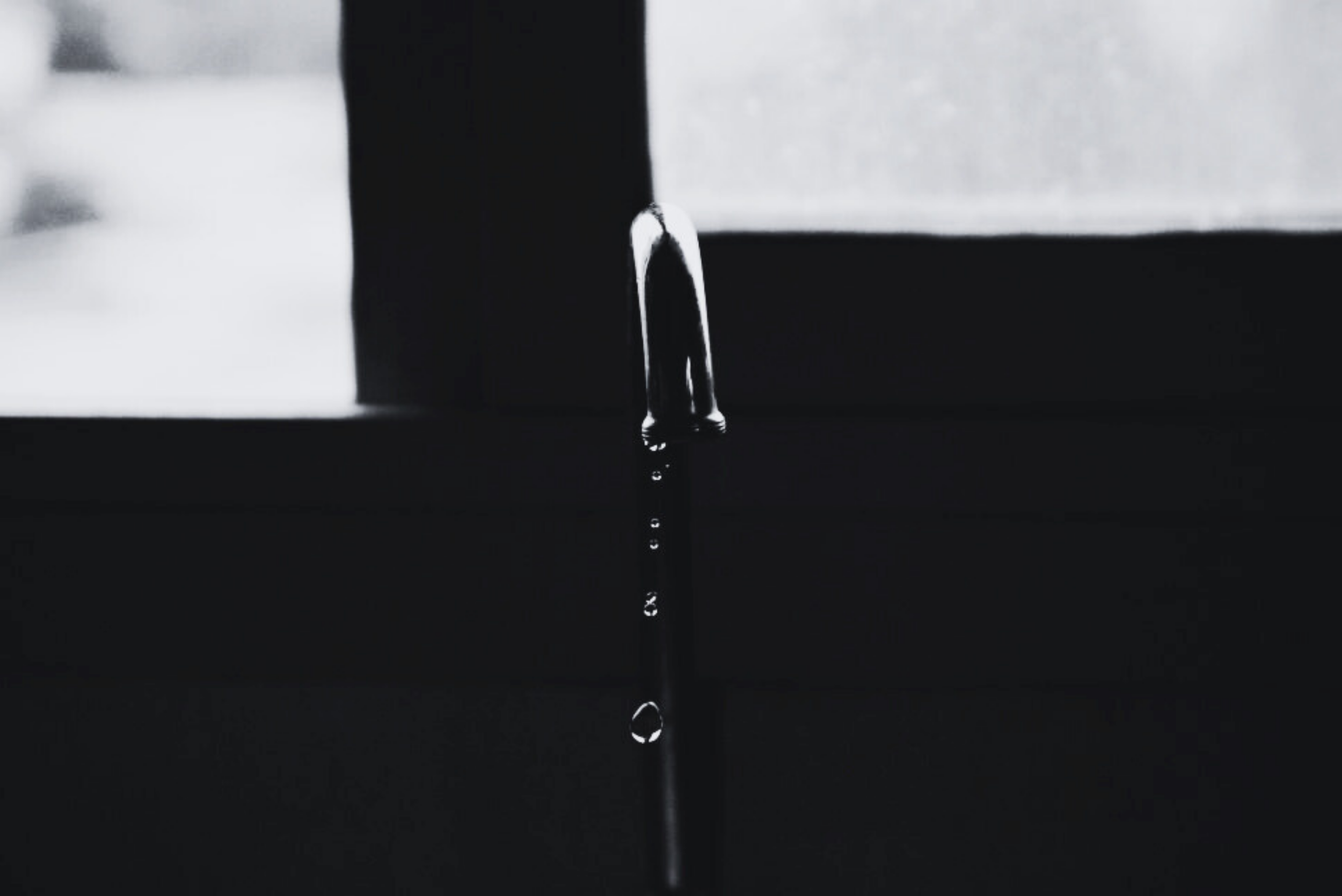
It was 7:14 a.m. The party was at seven tonight. He had nearly twelve hours. He also had sixty invitations out, a caterer arriving at five, a playlist he'd spent two weeks assembling with the seriousness of a doctoral thesis, and a bathroom faucet that had started dripping at some point during the night with the slow, metronomic persistence of a fact you can't outrun.
He stood in the living room and looked at the space. Eight years he'd lived here. The apartment had good bones—prewar, high ceilings, original molding that the landlord had painted over so many times it had lost its detail, the way a word repeated enough times loses its meaning. The light was best in the afternoon, when it came through the west-facing windows and made the hardwood glow like something you'd want to photograph. He'd chosen the apartment for the light. He'd stayed for the neighborhood, the bodega on the corner where they knew his order, the dry cleaner who called him "my friend" and meant it in a way that felt earned rather than transactional.
Kieran was a landscape architect. He designed public spaces—parks, plazas, the kinds of places where strangers sat on benches he'd chosen and ate lunch on lawns he'd graded and never once thought about the person who'd decided the bench should face east or the lawn should slope at precisely this angle for drainage. He was good at his job. He liked that his work was used without being noticed. There was something honest in that—designing a thing whose success was measured by how invisible it was.
He'd come to landscape architecture through a series of lateral movements that looked, in retrospect, like a plan but had felt, at the time, like a man following the only door that was open. He'd studied English in college. He'd worked at a bookstore for two years, then a nonprofit for three, then drifted into urban planning through a temp job that became permanent, and from urban planning into landscape architecture through a mentor named Joan who'd looked at his sketches of public spaces—drawings he'd been making in his notebook for years, privately, the way some people write poetry—and said, "You should be doing this for a living." Joan hadn't asked permission to change his life. She'd just stated a fact, and the fact had turned out to be true.
He had a wide social circle. This wasn't an accident. Kieran was the kind of man who remembered birthdays without digital reminders, who showed up on moving day with boxes and tape and the specific energy of someone who believed showing up wasn't optional. He sent texts that said "thinking of you" at exactly the right time—not when someone posted about a loss or a hardship, which was when everyone texted, but three weeks later, when the casseroles had stopped and the world had moved on and the person was alone with the shape of what had changed. He had a talent for the delayed gesture. For the follow-up. For being the person who was still there when the crisis had passed and the ordinary resumed and the ordinary was, somehow, worse.
He was good at friendship the way some people were good at music—naturally, attentively, with an ear for what was needed. He'd been this way since childhood. The kid who noticed when someone was eating alone in the cafeteria and moved his tray without making it a production. The teenager who drove forty minutes to a friend's house at midnight because the friend's voice had sounded wrong on the phone. The adult who kept a running inventory of his people's lives—who was struggling, who was celebrating, who was quietly enduring something they hadn't named yet—and adjusted his attention accordingly.
This attentiveness had a cost, though the cost was invisible the way his landscapes were invisible—structural, foundational, noticed only in its absence. The cost was that Kieran's attention flowed outward. It was a river with no tributaries. He tended to other people's lives with the care of a gardener, and his own life grew in whatever shape it grew, untended, and the shape was fine. The shape was a perfectly acceptable life. But it was the shape of a life no one had designed, and Kieran—who designed spaces for a living, who understood that design was an act of intention—had never turned that intention on himself.
But he had never thrown himself a party.
Birthdays had always been managed occasions. Dinner with a few friends at a restaurant someone else chose. Maybe a bar afterward, if the energy was right, which it usually wasn't because Kieran's birthday was in February and February in this city was a personal assault—the cold not dramatic enough for beauty, the gray not deep enough for atmosphere, just the thin, persistent unpleasantness of a month that existed primarily as a bridge between January and March. Thirty-eight had been dinner with six people at a Thai place where the pad see ew was reliable and the noise level allowed you to talk without shouting, which was Kieran's primary criterion for restaurants and possibly for life. Thirty-nine had been drinks with his friend Val and her husband and a mutual friend named Diane who'd gotten a little too drunk and told a story about her divorce that Kieran was still thinking about eleven months later—not because the story was unusual but because Diane had told it with a rawness that suggested she'd forgotten she was performing, and the forgetting had been the most honest thing Kieran had witnessed in months.
Forty was different. Forty was a number with weight, a number that divided a life into a before and an after whether you consented to the division or not. He'd been thinking about it since September, when the first person asked what he was doing for the big one and he'd said "nothing special" with the reflexive deflection of a man who'd spent his life making himself easy to cancel on.
That night, alone in the apartment, he'd sat on the couch with a glass of water—not wine, not bourbon, water, because the thought he was about to have required clarity—and examined the deflection. Not the number. The deflection. The automatic nothing special. The way he'd said it without deciding to say it, the way you say "I'm fine" or "no worries"—language that operates below the level of intention, language that protects you from wanting things out loud.
He'd wanted things, of course. Privately. In the way you want things when you've learned that wanting makes you visible and visibility makes you vulnerable and vulnerability, for a long time, wasn't safe. Kieran had come out at twenty-two, which wasn't late but wasn't early, and the coming out had been—fine. His parents were fine. His father had said "okay" and then asked about the Knicks game, which was either radical acceptance or a failure of engagement and Kieran had spent the subsequent fourteen years deciding it was both. His mother had hugged him and said "I love you no matter what" and the "no matter what" had contained, inside its generosity, the implication that there was a what—a condition, a thing to be overcome, a deviation from the expected that required the invocation of unconditional love, which wouldn't have been invoked if the condition weren't, at some level, a problem.
His friends were fine. Everyone was fine in a way that was genuine and also insufficient, because fine meant the absence of catastrophe, and the absence of catastrophe wasn't the same as the presence of welcome. No one had rejected him. No one had exactly embraced him either. They'd made room, the way you make room on a couch—a practical adjustment, not a celebration.
He'd built his life in the room they'd made. Built it well. Built it with the particular care of someone who understood that the room could contract if he took up too much space, if he wanted too loudly, if he made himself difficult to accommodate. So he'd made himself easy. Easy to be around. Easy to cancel on. Easy to invite last minute because he was always available and never demanded advance planning. He was the friend who said "whatever works for you." The friend who suggested restaurants based on other people's dietary restrictions. The friend who, when asked what he wanted for his birthday, said "just your company" and meant it as a kindness and didn't recognize it as an erasure.
He'd had relationships. Three significant ones. The first, at twenty-four, with a man named Patrick who was beautiful and unkind and who'd taught Kieran, over eighteen months, that love could be a form of surveillance. Patrick had opinions about how Kieran dressed, how he laughed, how he held his body in public—the constant, low-grade project of making Kieran into a version of himself that Patrick found acceptable. When it ended, Kieran hadn't been heartbroken. He'd been relieved, and the relief had frightened him more than the relationship had, because relief implied he'd been enduring something, and enduring was supposed to be his strength, not his trap.
The second, at twenty-nine, with a man named Will who was kind and steady and who'd loved Kieran in a way that should have been enough and wasn't. Not because of Will. Because Kieran couldn't receive it. Will would make dinner and Kieran would eat it and be grateful but the gratitude stayed on the surface, like oil on water—present, visible, unable to penetrate. Will had said, on the night he left, "I feel like I'm loving a wall. A really nice wall. But a wall." Kieran hadn't argued. He'd understood, with the clarity of a man watching someone describe his architecture from the outside, that Will was right.
The third, at thirty-three, with a man named Reed who'd been as emotionally guarded as Kieran, and the relationship had been a masterpiece of mutual withholding—two men who never asked each other for anything, who never fought because fighting required investment, who moved through three years with the frictionless efficiency of roommates who occasionally slept together. It ended by mutual agreement, over breakfast, with the politeness of two people closing a joint bank account. Neither of them cried. Kieran had gone to work that day and designed a park.
Since Reed—seven years. Seven years of singleness that had calcified from circumstance into identity, the way a temporary arrangement becomes permanent if nobody revisits the decision. He dated occasionally. He went on apps. He maintained a profile that said the things profiles say—loves hiking, good food, looking for connection—and the words were true and also meaningless, the biographical equivalent of a corporate mission statement. Loves hiking. Who didn't love hiking. Looking for connection. Everyone was looking for connection. The profile described a man who could be anyone, which was, Kieran understood, the point.
He'd been on roughly sixty first dates in seven years. Coffee, mostly. Sometimes drinks. Twice, dinner, when the photos were especially good and the messaging had been especially promising. Sixty men across sixty tables, each one a potential and each one, by the end of the hour, not quite.
Not because they were wrong. That was what made it exhausting. They weren't wrong. They were fine. The banker who talked about his mother with genuine affection and who kissed Kieran on the cheek at the subway entrance and whom Kieran never called back. The graphic designer who made Kieran laugh three times in forty minutes—a high count—and who texted the next day and received Kieran's trademark response, the friendly deflection, the "great meeting you, crazy week, let's find a time," and the time never materialized because Kieran never let it materialize, because materializing required follow-through and follow-through required want and want required admitting that the evening had mattered.
The therapist he'd seen for two years—Lorraine, a woman in her fifties with reading glasses and a potted fern and the patience of a geological formation—had asked him once why he thought the dates never went anywhere. He'd given her the easy answer. Haven't met the right person. Lorraine had let the sentence sit in the room the way she let all his sentences sit, with the unhurried attention of someone who knew the first answer was never the real one, and eventually Kieran had said, "I don't think I know how to let someone in without losing myself." And Lorraine had said, "Who taught you that those were the only options?" And Kieran hadn't answered, because the answer was his whole life, and the fern had watched him not answer with the polite disinterest of a plant that had heard everything.
He'd stopped seeing Lorraine at thirty-eight. Not because the work was done but because he'd reached the point where he understood the pattern and understanding the pattern wasn't the same as breaking it. He needed a different way. Or he needed to stop trying and accept the pattern. Or he needed to throw himself a party. One of those.
What he was sure about, sitting on his couch in September with a glass of water, was that the nothing special had to stop. Not because he needed a party. Because he needed to practice wanting something and saying it out loud. The party was the practice.
He'd made a list in October. Revised it in November. Finalized it in January. The list itself had been an education. He'd started with the easy names—Val, Diane, his college friends, his work colleagues—and then moved into the territory that made his chest tight. The friends he saw less often. The people he'd been meaning to reach out to. His neighbor Sonia, who'd been bringing him soup when it was cold for three years and whom he'd never once invited inside. His old roommate Alan, who'd moved to Connecticut and whom Kieran hadn't spoken to since the last time Alan had texted and Kieran had responded with a thumbs-up emoji, which was the digital equivalent of a closed door.
He'd sent the invitations by mail. Physical invitations, on cardstock, because he'd wanted the act of opening an envelope, the small ceremony of being asked. He'd gone to a stationery shop and spent forty-five minutes choosing the paper—not the font or the wording but the weight of the paper, the way it felt in the hand, because Kieran was a man who understood materials and knew that the first thing a person would feel, before they read a word, was the paper itself.
The invitations said, "Kieran Calloway is turning forty and would like you to be there." Not "you're invited to" or "please join us"—those were the passive constructions of a man hiding behind grammar. He'd written "would like you to be there" because it was true, and because the truth of it—the directness, the want—was the point.
The RSVPs had come in slowly and then all at once. Most people said yes. Some said no with genuine regret—travel, illness, a child's school event. Three people hadn't responded at all, and Kieran had cataloged their silence with a precision that embarrassed him. He knew it was unreasonable to feel wounded by a non-RSVP. He also knew that reasonableness had nothing to do with it.
Now it was the morning of. The apartment was clean. The faucet was dripping. And Kieran was standing in his living room at 7:14 a.m. feeling something he couldn't name, which was different from feeling nothing, which was what he usually felt on his birthday, which was its own kind of information.
He decided to go for a walk.
The city in February was the color of dishwater. Not ugly exactly, but stripped—the trees bare, the sky low, the sidewalks wearing the particular gray that accumulated between snowfalls like sediment. Kieran walked without a route, which was unusual for him. He was a man who planned his walks the way he planned his parks—with an awareness of sight lines, of transitions, of the experience of moving through space. Today he walked without planning, and the not-planning was its own kind of information, too. His body chose the direction. His body turned left where he usually turned right. His body crossed a street he usually didn't cross and arrived at a coffee shop he'd never been to, on a block he'd walked past a thousand times without registering.
It was small—eight tables, a counter, the kind of place that still wrote your name on the cup even though they only had eight tables and could see your face. He ordered coffee and sat by the window and watched the street.
The coffee shop was a holdout against the tide of minimalist cafés with oat milk menus and geometric light fixtures that had colonized the neighborhood over the past five years. This place had mismatched chairs and a chalkboard that said "Coffee. Hot." and a cat asleep on a stack of newspapers by the door. The cat was orange and enormous and completely indifferent to its own charm, which was, Kieran thought, the secret of all real charm—the not-knowing.
He sat with his coffee and thought about the party.
What he was doing—the invitations, the caterer, the playlist, the asking—was new. Not new in the way that a hobby was new or a restaurant was new. New in the way that a language was new. He was learning to speak a language he'd always understood but never used. The language of wanting. The language of "I would like you to be there." The language that said, in effect, I am making myself the occasion, and I am asking you to prioritize me, and the asking is the hardest thing I've done in a year that has included a root canal and a tax audit.
He thought about his mother, who threw herself a party every year. A big one—fifty, sixty people, folding tables in the backyard, a cake she ordered from the same bakery every year with the same inscription—"Another year, another party, still here." His mother was a woman who took up space unapologetically. She laughed loudly. She told stories that went on too long and didn't care. She'd thrown Kieran a party for every birthday until he was eighteen and had continued to offer every year since, and every year he'd said no, and she'd said "your loss, baby," and she'd been right, though he was only understanding that now.
He thought about his father, who'd died when Kieran was twenty-six. A heart attack on a Tuesday afternoon—the randomness of it had been its own form of cruelty, because a Tuesday afternoon wasn't dramatic enough to contain a death. His father should have died on a storm-dark night or a bright Sunday morning or at the very least on a day of the week that carried some narrative weight. But no. A Tuesday. In the kitchen. Reaching for a glass.
His father had been a quiet man. A man who showed love through logistics—keeping the car maintained, fixing the leaky gutter, driving forty minutes to pick up the specific brand of orange juice Kieran liked when he came home from college. He'd never thrown a party. He'd attended his mother's parties and stood near the grill with a beer and a posture that said I am here because I love the woman who organized this, and that's enough for me. His father's love had been a service provided, not a need expressed. Kieran had inherited this. He'd spent fourteen years since his father's death understanding that inheriting someone's limitation wasn't the same as honoring them. The understanding didn't make the inheritance easier to dismantle. Knowing the architecture of a thing wasn't the same as renovating it.
The coffee was mediocre. The cat was excellent. Kieran left a five-dollar tip for the cat's contribution and walked back into the February air.
Walking home, he passed a florist and stopped. He hadn't planned flowers. He didn't know why he was stopping. The shop was cramped and fragrant and presided over by a woman in her sixties with reading glasses on a chain and the no-nonsense energy of someone who'd been explaining the difference between peonies and ranunculus for thirty years.
"I need flowers for a party," he said. "My party. My birthday."
"Happy birthday. How many people?"
"Maybe fifty. Maybe more."
"What do you like?"
Kieran opened his mouth and closed it. He didn't know what he liked. He'd spent his entire professional career choosing plants for other people's spaces—native grasses, drought-resistant perennials, shade trees with specific canopy widths—and he'd never once considered what flowers he'd want in his own living room. He chose plants the way his father had chosen orange juice—for someone else. The realization was small and enormous simultaneously.
"I don't know," he said.
The florist looked at him over her glasses. She didn't fill the silence. She waited. It was a good wait—patient, unhurried, the wait of a person who understood that some questions needed more time than others.
"Something that smells good," he said. "Something you can smell when you walk in the room."
She made him three arrangements. Gardenias, tuberose, paperwhites. She wrapped them in brown paper and handed them across the counter and said, "These are good choices. You'll know they're right when you get home."
He carried the flowers home through the February cold, the brown paper crackling against his jacket, and he could smell them through the wrapping—sweet, warm, insistent. The smelling was a kind of proof. Of what, he wasn't sure. Of something starting. Of a man carrying flowers home for his own party on his fortieth birthday, and the carrying being, in itself, a small declaration.
He passed the bodega where they knew his order. Ahmad was behind the counter, as he was every morning, and he said "Happy birthday, my friend" without Kieran having mentioned it, which meant either Val had told him or Sonia had told him or the neighborhood had its own intelligence network that operated below the level of conscious communication. Kieran thanked him. Ahmad said, "Big party tonight, yes? Sonia told me. She's very excited. She bought a new dress." The idea of Sonia buying a new dress for his party did something to Kieran that he wasn't prepared for. It meant his party existed in other people's lives. It had weight outside his own apartment. People were preparing for it. People were choosing what to wear. His party was an event in the world, not just a plan in his head, and the transition from plan to event was a kind of birth he hadn't anticipated.
He passed the dry cleaner, who waved through the glass. He passed the elementary school where, every weekday morning, he watched the parents drop off their children and felt—not envy, exactly. Curiosity. The curiosity of a man observing a species of intimacy he hadn't experienced. The quick kiss on the forehead. The backpack adjustment. The "have a good day" that was both ritual and prayer. Kieran had designed two school playgrounds in his career, and both times he'd thought about what the space needed to do—not for the children, who would use it instinctively, but for the parents, who needed to be able to see their children from the sidewalk, who needed the sight line between drop-off and the school door to be unobstructed, who needed the architecture to say your child is visible, your child is safe, you can go now.
He'd designed that sight line. He'd never stood on the parent side of it.
The apartment with the flowers was different from the apartment without the flowers. He set them on the dining table—the table he'd bought at an estate sale four years ago, solid walnut, designed for six, at which Kieran usually sat alone with his laptop and a bowl of whatever he'd ordered—and the gardenias opened the room up. The smell was immediate and specific and did something to the quality of the light. Or not to the light but to his perception of the light. The apartment looked, suddenly, like a place where something was about to happen.
He showered. He dressed—dark jeans, a white T-shirt, the blue button-down over it, unbuttoned. Then buttoned. Then unbuttoned again. He looked at himself in the bathroom mirror. A man of forty with dark hair going gray at the temples and the kind of face that was better in motion than in photographs. Not handsome in the way that stopped you on the street. Handsome in the way that accumulated—a face that improved with familiarity, that revealed itself over time, that rewarded the people who stuck around long enough to learn its vocabulary. He didn't hate the face. He'd spent long enough reconciling with it. It was a good face. It was the face of a man who was about to ask fifty people to come to his apartment and celebrate the fact that he existed, and who was, as of 1:47 p.m., terrified.
The terror wasn't social anxiety. Kieran was good at parties—other people's parties. He was the man who talked to the person standing alone by the drinks table. He was the man who asked follow-up questions and remembered what you'd said the last time and laughed at your joke even when it wasn't funny because he understood that most jokes weren't about humor but about the willingness to be seen trying. He was good at other people's parties because other people's parties required a skill set he'd mastered—attentiveness, generosity, the ability to make someone else feel important. His own party required a different skill set entirely. His own party required him to be the center, and the center was a place he'd spent forty years avoiding with the discipline of a man who'd mistaken the perimeter for home.
The afternoon passed. He rearranged the living room furniture twice, then put it back. He tested the playlist on the Bluetooth speaker and adjusted the volume four times. He checked the bathroom faucet—still dripping—and considered watching another YouTube tutorial and decided against it. Some problems couldn't be solved before the guests arrived. Some problems were just going to drip.
The caterer arrived at five. Her name was Lucia. She was brisk, competent, and completely uninterested in Kieran's anxiety. She took over the kitchen with the efficiency of an occupying force, unpacking boxes and arranging platters and asking questions Kieran hadn't considered—"Where's your ice?" and "Do you have a serving table or should I use the counter?" and "The oven runs hot, do you know that?"—and her competence was, paradoxically, calming. Someone else was in charge of the food. Someone else was thinking about logistics. Kieran could focus on the one job that remained, which was to be present when people arrived. To stand in his own living room and be the reason they'd come.
At 5:30, the faucet was still dripping. He went to the bathroom and stared at it. The drip was slow—one drop every four seconds, as reliable as a metronome. He'd meant to call a plumber. He'd been meaning to call a plumber for three weeks, the way you mean to do things that aren't urgent enough to act on and aren't minor enough to forget. The faucet had chosen his birthday to become a metaphor, which he resented.
He put a towel under it. The dripping continued. The towel absorbed it. This wasn't a solution. This was management. But management was what he had, and the party was in ninety minutes, and the faucet would survive the evening, and so would he.
At 6:15, he changed his shirt. The blue button-down—the one he'd bought two weeks ago specifically for tonight and had been pretending was an impulse purchase. He looked in the mirror. He looked fine. He looked like a man who was turning forty and had cleaned his apartment and bought flowers and hired a caterer and changed his shirt three times and was now standing in his bathroom above a dripping faucet and a damp towel, trying to locate, in his own reflection, some evidence that he was ready for what was about to happen.
He didn't find it. He went to the living room anyway.
The street outside was doing its usual evening thing—headlights, pedestrians, the sound of the city settling into its nighttime register. From this window, on most evenings, Kieran watched the city without being watched. He liked the asymmetry. The looking-out without the looking-in. It was the perimeter again. The safe distance from which he observed the world and designed spaces for it and went home alone and called it enough.
Tonight was an inversion. Tonight, people were coming in. Tonight, the apartment—his apartment, the space he'd calibrated for solitude, every surface reflecting the decisions of a man who answered to no one—was going to be full of people who would look at his bookshelves and his kitchen and his bathroom with the dripping faucet and form impressions about the life he'd built. The forming of impressions was itself a kind of intimacy he hadn't consented to but had, by throwing this party, invited.
He turned on the playlist. He'd organized it by energy—low and warm at the start, building through the evening, ending with the songs that made him happy, which was a category he'd never organized before because organizing by happiness required you to admit which songs made you happy, and the admission was a species of vulnerability he'd been avoiding. The first song filled the apartment. Something slow, something with horns, something that changed the air the way the gardenias had changed it—completely, specifically, turning the space from a place where a man lived alone into a place where something was about to begin.
He stood in the middle of the living room and listened to the song finish. Then the next one started—a piano piece, spare and warm, something he'd found on a playlist called "Sunday Morning" that he listened to on Sunday mornings while reading the paper, a ritual so private he'd never mentioned it to anyone because mentioning it would make it available for commentary and commentary would change it. He'd built his life on these private rituals. The Sunday piano. The walk to the bodega at exactly 8:15, before the line. The way he ate dinner standing at the kitchen counter on weeknights, not because he didn't have a table but because standing felt honest and sitting alone at a table for six felt like staging a photograph of loneliness. The private rituals were the scaffolding. They held the shape of his days. Tonight, the scaffolding was going to be full of people, and the people would change the shape, and the changing was—
He didn't finish the thought. Lucia called from the kitchen. "Ten minutes. You should eat something before guests come. You won't eat once it starts."
She was right. He ate a piece of bread with cheese, standing at the counter, the last meal he'd eat alone today, and the bread was good and the cheese was sharp and he stood there chewing and looking at his clean apartment with its flowers and its music and thought—this is the before. In ten minutes, the after starts. And the before was quiet and known and his, and the after was loud and unknown and shared, and neither was better than the other. They were different rooms in the same house. He'd been living in one room for a long time. Tonight he was opening the door to the other.
Lucia emerged from the kitchen. "Music is good," she said. "Food is ready. Ice is in the bucket. You're sweating."
"I'm not sweating."
"You're sweating a little. It's your party. You're allowed."
The doorbell rang at 7:02.
Val and her husband, Pete. Val was his oldest friend in the city—fifteen years of friendship built on a shared appreciation for bad movies and an unspoken agreement to never discuss feelings directly but instead to communicate emotional states through film recommendations. When Kieran was going through something, Val texted him titles. When his father died, she'd sent him a Blu-ray and a bag of gummy bears, and the combination had been more useful than any condolence card he'd received. She understood that grief didn't need language. Grief needed someone who'd sit on your couch and watch something beautiful and not ask you how you were feeling until you were ready to say.
Val hugged him. The hug was longer than usual—long enough that Kieran felt his throat tighten and had to swallow, which was his body telling him something his mind hadn't caught up to. Pete shook his hand and said, "The apartment looks great," which was the kind of thing Pete said because Pete was a man who complimented rooms the way other men complimented sports performances—sincerely, specifically, with a level of attention that suggested he actually cared about the space.
"Happy birthday," Val said. She handed him a gift bag. Inside was a framed photograph he'd never seen—the two of them at twenty-six, at a bar in the East Village, both laughing at something off-camera. He didn't remember the night. He remembered the bar. He remembered being twenty-six—the year his father died, the year he came out, the year everything shifted. And here was this photograph, evidence that in the middle of that shifting, he'd been laughing.
"Where did you find this?"
"I've had it forever. I had it framed because you're forty and I'm sentimental and shut up."
He put the photograph on the bookshelf, between a book of Japanese gardens he'd never opened and a small clay pot his mother had made in a ceramics class. It looked right there. It looked like something that had always been there and was only now arriving.
More people came. The apartment filled. Not all at once—in clusters, in waves, in the particular rhythm of a party finding its shape. His college friends arrived as a group, loud and affectionate and carrying wine they'd clearly purchased at the nearest bodega, which was perfect because the wine didn't matter—the arriving together mattered, the coordinated effort of four people who'd been friends for eighteen years and who still, after everything, showed up as a unit. His work colleague Mina came with her girlfriend, both of them bringing the easy warmth of people who were comfortable at parties and comfortable with each other and whose comfort radiated outward. Sonia from next door came in a dress and earrings Kieran had never seen her wear and said, "I can't believe you've never invited me inside. I've been bringing you soup for three years."
"I'm sorry," Kieran said.
"Don't be sorry. Have me over more." She looked around. "Your apartment is better than mine. I'm offended."
His friend Marcus—not the Marcus from work but the other Marcus, from his Saturday running group—arrived with a bottle of bourbon and the slightly breathless energy of a man who'd run from the subway. "I can't believe you did this," he said.
"Did what?"
"Threw yourself a party. You, Kieran Calloway, who has never once asked anyone for anything, threw yourself a party and invited sixty people."
"Not sixty. Maybe fifty."
"Fifty people. To your apartment. For your birthday. Do you understand how unprecedented this is? I've known you for seven years and I've never been inside this apartment."
"You're inside it now."
"I'm inside it now." Marcus raised his glass. "It's about time."
The comment stayed with Kieran as he moved through the party. It's about time. Marcus had said it casually, the way people say things that are true without knowing they're true, and the truth of it pressed against something in Kieran's chest—not painfully. Productively. The way a hand presses against a door that's been closed a long time and finds that the door was never locked. It had been closed. It hadn't been locked. The distinction was everything.
By 7:45, the apartment was full in the way that mattered—every room holding people, every corner generating its own conversation, the collective sound of voices overlapping and laughter arriving in unpredictable bursts and the music threading through it all like a current through water. Kieran had designed parks that worked this way—spaces that created the conditions for encounter without prescribing the encounter itself. The benches placed at angles that invited conversation. The paths that intersected so strangers would meet. He'd done the same thing with the furniture tonight, without thinking about it—moved the couch back, opened the sightlines, created flow.
He moved through the party and talked to people. He accepted birthday wishes—the hugs, the handshakes, the "you don't look forty" that people offered like a compliment and that Kieran received as one even though he did look forty and didn't mind looking forty. He'd been looking forward to forty, actually. Forty was a face you could trust. Forty had stopped apologizing.
At the drinks table, he ran into a man named Jerome whom he knew from a landscape architecture conference three years ago. They'd had one good conversation at that conference—about public space, about who it was designed for and who it excluded—and then hadn't spoken since. Jerome was here because Mina had brought him. Kieran hadn't known they knew each other. The party was producing its own connections, its own serendipities, the way his parks produced encounters between strangers who didn't know they needed to meet.
"I didn't know you lived here," Jerome said. "I work three blocks away."
"I didn't know you worked three blocks away."
They stood by the drinks table and had the second conversation they should have had three years ago. Jerome was designing a community garden in the Bronx. He wanted Kieran's opinion on drainage. Kieran gave it. The giving felt different tonight—not because the information was different but because the context was different. He was offering expertise in his own apartment, at his own party, and the offering was personal in a way that a conference conversation wasn't. He was saying, in effect, this is my home, and you're welcome in it, and I know things that might be useful to you, and the knowing and the welcoming are connected.
His college friend Priti found him in the hallway and pulled him into the bathroom—the only private space in the apartment—and said, "I need to tell you something."
"The faucet drips. I know."
"Not the faucet." She looked at him with the particular intensity of a woman who'd had two glasses of wine and was about to say something she'd been holding for a while. "I've been wanting to tell you—you're the reason I didn't leave the city in 2019. You know that, right? When Deepak and I split up and I was going to move back to Boston, you showed up at my apartment with boxes. Not to help me pack. To help me unpack. You said, 'You're not leaving. This city needs you.' And I stayed."
Kieran didn't remember saying that. He remembered the boxes. He remembered Priti's apartment, the half-packed living room, the particular desolation of a home in the process of being abandoned. He didn't remember the sentence.
"I say things like that?"
"You say things like that all the time. You just don't hear yourself say them."
She hugged him and went back to the party, and Kieran stood in the bathroom for a moment, above the dripping faucet and the damp towel, and absorbed the fact that he'd been making a difference in people's lives without accounting for it—the way his parks were used without being noticed, the way the bench faced east and the lawn drained properly and nobody knew that someone had decided these things, and the deciding was the love.
His friend David—college, now a civil rights attorney, still wearing the same style of glasses he'd worn at twenty—cornered him by the bookshelf and asked about Joan, the mentor who'd changed his career. David had met Joan once, at a dinner years ago, and had been fascinated by her. Kieran told the story of the sketches again—the notebook, Joan's declaration, the way his life had pivoted on someone else's certainty about him when he had no certainty about himself.
"That's the thing about you," David said. "You need someone else to tell you what's obvious."
"What's obvious?"
"That you're good at things. That people like you. That fifty people showed up on a Tuesday in February because you asked." David gestured at the room. "This isn't a mystery, Kieran. You just can't see it because you're standing too close."
At 8:30, the three non-RSVPs arrived. They hadn't coordinated—they'd just happened to arrive at the same time, which created the impression of a coordinated late entrance that Kieran chose not to interpret. They were here. That was enough. He hugged each of them and felt the relief land in his body before his mind could process it—the body faster than the mind, the body registering the arrival of something it had been waiting for without informing the mind that it was waiting.
Diane was animated by nine. She was telling the divorce story again, the one from his birthday last year, but tonight the story had evolved. New details. A different ending. The divorce was the same divorce, but Diane's relationship to it had changed, and the change was audible in the way she told it—less bitterness, more bewilderment, and for the first time, a growing capacity to find humor in the wreckage.
"You're telling that story differently," Kieran said.
"Am I?"
"You laughed at the part about the lawyer. Last year you didn't laugh."
Diane considered this. "Last year it wasn't funny."
"Is it funny now?"
"It's getting there." She drank. "Ask me next year."
Kieran liked this. The idea of next year. The assumption, embedded in Diane's sentence, that there would be a next year and that Kieran would be in it and that the story would continue evolving and that they'd be standing in a room—maybe this room—comparing versions. It was a small assumption. It contained a large faith.
At 9:15, Kieran went to the kitchen for ice.
The kitchen was quiet. Lucia had packed up and left at eight—the platters arranged, the trash organized, a sticky note on the counter that said "Happy 40. Don't wash the good plates tonight, they need to soak." The sticky note had a small smiley face on it. Kieran stuck it to the refrigerator because he wanted to keep it, and wanting to keep it was—was what? Was new. Was the same muscle he'd been exercising all day. The muscle of I like this, I want this, this is mine.
He opened the freezer. He took out the ice tray. He cracked it and the cubes fell into the bucket with the sound of something breaking gently, and he stood there.
Through the kitchen doorway, he could see the living room.
His living room. Full.
Val was on the couch, talking to Mina's girlfriend about something that required hand gestures and emphatic nodding. Marcus from running was by the window, arguing with David about something that was either basketball or politics or the philosophical relationship between the two, which was a conversation they'd been having for—Kieran realized—this was the first time they'd met. They'd been having this conversation for twenty minutes and they'd only just met tonight, in his apartment, at his party.
Sonia was sitting in the armchair Kieran read in every night—his armchair, the one that had held only his body for eight years—and she was laughing at something Pete was saying. The laugh opened her face in a way the hallway had never shown him. He'd known Sonia for three years. He'd accepted her soup. He'd never heard her laugh.
Diane was on the floor. Sitting on his floor, cross-legged, leaning against the bookshelf where the photograph of him and Val now lived, talking to someone Kieran didn't immediately recognize—a friend of a friend, a plus-one, someone who'd come because someone else was coming and who was now sitting on his floor listening to Diane's divorce story and nodding with the attention of a person who was genuinely listening and not just waiting to speak.
The playlist had reached its midpoint. Something with piano—slow, building, the kind of music that changes the weight of the air without announcing itself. The music filled the apartment the way the gardenias had filled it earlier—completely, specifically.
Kieran stood in the kitchen doorway holding a bucket of ice and looked at his living room and the feeling arrived.
Not joy, exactly. Joy was too simple. Too clean. This was messier than joy. It had more texture, more grit. It had the weight of the months he'd spent deciding whether to do this—the list in October, the revisions in November, the cardstock invitations he'd addressed by hand because he'd wanted each person to see his handwriting and know they hadn't been mass-produced. It had the weight of the faucet still dripping in the bathroom and the shirt he'd changed three times and the florist who'd waited while he figured out what he liked.
It was closer to permission. That was the nearest word he could find. The feeling of discovering that you were allowed to want things. That wanting didn't make you needy. That needy wasn't the catastrophe he'd been treating it as since he was twenty-two years old, standing in his parents' living room, listening to his mother say "no matter what" and absorbing the what as a boundary when it was meant as a bridge.
The people in the next room had come because he'd asked. That was the whole thing. The whole revelation, wearing its ordinary clothes, standing in his kitchen, dripping ice water onto his floor. He had asked, and they had come.
He thought about his mother's parties. Another year, another party, still here. He'd always read the inscription as bravado—his mother's loud, unsubtle insistence on her own existence. Standing in his kitchen at forty, he read it differently. It wasn't bravado. It was testimony. His mother had been saying, every year, to fifty people in her backyard—I am here. I am asking you to witness that I am here. And the asking wasn't weakness. The asking was the bravest thing she did.
He carried the ice to the living room. Someone took a cube. Someone else said, "Kieran, this playlist—who are you?" and the question was a joke but also wasn't a joke, because the playlist was the most honest thing he'd shared—more honest than any conversation, more revealing than any confession. The playlist said these are the songs that make me happy, and I've never let you hear them until tonight.
"I'm the birthday boy," he said. "I'm whatever I want to be."
Val heard this from across the room. She raised her glass. She didn't say anything. She didn't need to.
The party went on. Conversations migrated. Groups formed and dissolved and reformed in the way that particles do in warm liquid—constant motion, constant collision, occasional crystallization into something that held for a moment before dissolving again. The apartment did the thing that apartments do when they're full of people who are enjoying themselves—it expanded. Not physically, but in the way that mattered. The walls were the same walls. The rooms were the same rooms. But the space between the walls felt larger because it was holding more life than it usually held, and life, it turned out, wasn't a fixed quantity. The apartment could hold more than he'd been giving it.
At ten, someone put on a different song—not from the playlist, a song someone had queued from their phone—and Kieran felt the flash of something proprietary, the instinct to correct, to reclaim the playlist he'd spent two weeks building. He let the instinct pass. The song was good. It was a song he didn't know, which meant someone in his apartment was teaching him something, and the teaching was its own form of gift.
At 10:30, Alan found Kieran in the hallway.
Alan—the old roommate from Connecticut. The thumbs-up emoji. The two-hour drive on a Tuesday in February. He was standing in the hallway holding a beer and looking at Kieran's bookshelves with the particular intensity of a man who was reading the spines and drawing conclusions.
"Your reading has gotten better," Alan said.
"It's been five years since you've been here. You've never been here."
"No. But I remember your old bookshelf. In the apartment on Seventh. It was all architecture and landscaping stuff. Now you've got—" He tilted his head. "—novels. Poetry. Is that Mary Oliver?"
"It's Mary Oliver."
"Kieran Calloway reads poetry."
"Kieran Calloway reads poetry."
Alan shook his head. Not disapproving—marveling. "You know what, man? I drove two hours to get here because my wife opened your invitation and said 'someone still does this?' and I realized I hadn't been inside a space of yours in five years and I didn't know why. And now I'm standing here looking at your bookshelf and I'm realizing—I didn't know you read poetry. I didn't know you had this apartment. I didn't know you listened to this kind of music."
He paused. He looked at the living room, at the people, at the flowers on the table.
"Your life is good, man. I didn't know that because you never showed me."
The sentence landed. It landed the way things land when they're true and you didn't see them coming and you can't unfeel them once they've arrived. Kieran hadn't shown anyone. That was the architecture of his solitude—not keeping people out but not letting them in. The distinction was subtle and meaningless. The effect was the same. A wall was a wall, regardless of which side you'd built it from.
"I'm showing you now," Kieran said.
"You are."
By eleven, the party was thinning. The couples with children left first—the apologetic departure, the "we have a sitter" explanation delivered as if having a sitter were a personal failing rather than a logistical fact. Then the work colleagues, who had the particular exit energy of people transitioning from social mode to commute mode, the warmth cooling in real time as they calculated train schedules and checked ride-share apps.
The late-stayers were the inner circle. Not by design—by gravity. Val and Pete. Diane. Marcus from running. Sonia. Alan. They were the ones who didn't need the full party to justify their presence. They were comfortable in the residue, in the quieter room, in the version of the evening where the music was lower and the conversations went somewhere real and the pauses between sentences were allowed to be long.
They sat in the living room—couch, floor, armchair, a dining chair someone had dragged in—and the configuration looked, Kieran thought, like something he would have designed. An informal circle. No hierarchy. Every seat facing the center, which was the coffee table, on which sat a half-eaten cake that Kieran had forgotten to cut because he'd been too busy being in the party to perform the rituals of the party. Someone had cut it anyway. Someone had stuck a candle in it and sung and Kieran had blown out the candle and hadn't made a wish because the wish was the room, and the room was already here.
Diane told a story about her daughter's school play—nothing to do with the divorce, everything to do with the particular terror of watching your child perform in front of strangers and wanting them to be brilliant and also wanting them to survive the not-being-brilliant. Val and Sonia argued about a book they'd both read and disagreed about. The arguing was pleasurable to watch, because it was an argument between two people who'd met three hours ago and already respected each other enough to disagree.
Marcus told Kieran, quietly, by the window, that he was going through something at work he hadn't told anyone about. The telling was halting. Not because the words were hard—the words were simple. Because the act of saying them, of offering a piece of unfinished difficulty to another person, required a trust that Marcus was extending for the first time in this friendship. Kieran listened. He listened the way he always listened—attentively, fully, without rushing to fix. But tonight the listening felt different. Usually, listening was a service he provided, flowing outward. Tonight, listening was also receiving. Marcus was giving him something. Not the information—the trust. The willingness to say I am struggling, in Kieran's apartment, at Kieran's party. The willingness to say this space you've made is safe enough for me to be honest in.
The faucet was still dripping. Kieran could hear it during the quiet moments, through the wall, the slow plip plip plip that hadn't stopped all day and that he'd managed with a towel and would manage with a plumber tomorrow. The dripping didn't bother him anymore. It was part of the evening—the rhythm beneath the rhythm, the imperfection that made everything else real. A perfect party would have been suspicious. A perfect party would have been a performance. The dripping faucet was evidence that this was a life, not a set.
By midnight, everyone was gone except Val.
They sat on the couch. The apartment was wrecked—glasses on every surface, a plate with a single olive on the mantel, a napkin on the floor that someone had used to write a phone number and then left behind, which was either carelessness or the best kind of optimism. The gardenias on the dining table had opened fully during the evening, their scent thicker now, the smell of something that had given everything it had.
"So," Val said.
"So."
"How are you?"
"I don't know. Good. I think good."
"You did something tonight."
"I had a party."
"You didn't just have a party." Val shifted on the couch, pulling her legs up, settling in. "You asked for something. You, Kieran Calloway, who has never asked for anything in the fifteen years I've known you, sent sixty cardstock invitations and asked people to come to your apartment and be there for you. For you." She said the last two words with emphasis, as if they were the sentence and everything before them was preamble.
"Fifty. Not sixty."
"Shut up." She leaned her head against the back of the couch. "Do you know what it's been like, being your friend? Do you know what it's like to love someone who won't let you show up for him?"
"Val—"
"I'm serious. You show up for everyone. You're the first person there. You send the text three weeks later. You remember everyone's birthday and everyone's kid's name and everyone's weird food allergy. And then your birthday comes and you say 'nothing special' and we all go to a Thai restaurant and pretend that's enough because you've made it very clear that that's all you're willing to accept."
She wasn't angry. She was something else. Something that had been waiting for this opening and had finally found it, here, at midnight, on the couch, in the wreckage of a party that had just proven her right.
"Tonight was different," she said. "Tonight you let us come inside."
The word inside did something. It pressed against the same place in his chest that Marcus's "it's about time" had pressed against, and the pressing was productive—painful and necessary and good, the way stretching a muscle that's been held tight for years is painful and necessary and good.
"I didn't know how," Kieran said. It was the truest thing he'd said all evening. Truer than the playlist. Truer than the invitations. Five words that contained twenty years of making himself easy and not recognizing the ease as a cage.
Val turned her head on the cushion and looked at him. "I know," she said. "That's what made tonight brave."
She left at 12:30. A hug at the door that lasted longer than their usual hug and shorter than the moment required, and then she was gone, and the apartment was quiet.
Not empty. Quiet. There was a difference, and the difference was everything he'd learned tonight. Empty was the apartment at 7:14 this morning, scrubbed clean and waiting. Quiet was the apartment at 12:35, holding the residue of fifty people who'd been here, whose laughter still lived in the walls if you listened for it, whose conversations still occupied the corners like warmth after a fire.
Kieran stood in the living room. The playlist had ended hours ago, but the Bluetooth speaker was still on, humming faintly, the electric patience of a device that didn't know the music was over. He didn't turn it off. He stood in his socks on the hardwood floor—the floor he'd walked on every day alone, the floor that had held fifty people tonight—and looked at the mess.
Glasses everywhere. A wine stain on the rug he'd deal with tomorrow. The plate with the single olive, which had somehow survived the entire evening without being eaten or removed, a small monument to the overlooked. The napkin with the phone number. A jacket someone had left on the back of a chair—he'd figure out whose tomorrow. The flowers on the table, fully open, spent and glorious, giving off the last of their scent with the generosity of something that had nothing left to hold back.
He walked through the apartment. Room by room, the way he'd cleaned it this morning, but in reverse—not organizing but reading. The kitchen, where Lucia's sticky note was on the refrigerator and the good plates were soaking and the counter bore a ring from a wine glass that hadn't found a coaster. The hallway, where someone had leaned against the wall hard enough to leave a faint scuff that Kieran could see only because he knew where to look. The bathroom, where the faucet was still dripping and the towel was damp and Priti had left a lipstick print on the hand towel, a small signature of presence.
Each room held its evidence. Each room had been changed by the evening and would change back by morning—the wine ring would be wiped, the scuff would fade, the lipstick would wash out. The party wasn't a permanent renovation. It was a proof of concept. The apartment could hold this. He could hold this. The holding wasn't permanent, and it didn't need to be. It just needed to have happened.
He went back to the living room. He looked at the bookshelf, at the photograph of himself and Val at twenty-six. Two people laughing. Fourteen years between the photograph and tonight. Fourteen years during which Kieran had built a life that looked, from the outside, like exactly what it was—a good life, a full life, a life with friends and work and purpose and a neighborhood where people knew his name. And fourteen years during which the life had been, from the inside, a beautiful room with the door closed.
He'd opened the door tonight. Not thrown it open—opened it. The distinction mattered. Throwing it open would have been dramatic, performative, the kind of gesture that drew attention to itself. Opening it was quieter. Opening it was sending a cardstock invitation and buying gardenias and standing in his kitchen doorway holding ice and letting his living room fill and letting the filling mean something.
He didn't clean up. Not tonight. Tonight, the mess was evidence. Proof that something had happened here. Proof that he had asked, and they had come. Proof that the apartment could hold this—the noise, the laughter, the presence of people who loved him in their different and imperfect and specific ways. The glasses were proof. The wine stain was proof. The olive was proof.
The photograph Val had given him was on the bookshelf, leaning slightly against the spine of a book of Japanese gardens. Two people at twenty-six, laughing. He'd been twenty-six when his father died and he came out and everything changed. And here, in this photograph, he was laughing. Not performing happiness. Not managing an impression. Laughing, because something off-camera was funny and he'd forgotten, for a second, to be careful.
He looked at the photograph and then at the living room and then at himself, reflected dimly in the dark window—a man in his apartment, in his socks, forty years old, alone in a room that still held the warmth of everyone who'd showed up.
He thought about the florist. "You'll know they're right when you get home." She'd been talking about the flowers. She'd also been talking about everything else.
He thought about his mother. Another year, another party, still here. He'd call her tomorrow. He'd tell her about the party. She'd say "it's about time, baby," because she'd been saying it his whole life, and he'd finally understand that she wasn't impatient with him. She was waiting for him. She'd always been waiting for him to arrive at the thing she already knew—that being alive was an occasion, and occasions required witnesses, and asking for witnesses wasn't neediness. It was the bravest kind of love.
He thought about his father, reaching for a glass on a Tuesday. The randomness. The insufficient day. And then he thought—maybe Tuesday was enough. Maybe the reach for the glass was enough. Maybe the everyday gesture, the ordinary Tuesday, the unremarkable moment, was what his father had been trying to show him all along. That life didn't need to be dramatic to be worth witnessing. That the maintenance—the orange juice, the gutter, the car—was the love. And that the love didn't need an audience but was allowed to have one.
The faucet dripped. He could hear it through the wall. Plip. Plip. Plip.
He walked to the bathroom. He looked at the faucet, dripping into the towel. He looked at his face in the mirror—the face of forty, the gray temples, the lines that deepened when he smiled and that were deeper tonight than they'd been this morning because he'd been smiling for five hours.
He brushed his teeth. He turned off the bathroom light. He walked through the apartment without cleaning anything—past the glasses and the gardenias and the single olive, through the hallway where Alan had said "you never showed me" and he'd said "I'm showing you now," past the bookshelf with the photograph, and into the bedroom.
He got into bed. The sheets were cool. The room was dark. Through the wall, he could hear the faucet—patient, persistent, the metronome of an imperfect evening in an imperfect apartment in a life that was, he understood now, exactly the right size. Not too small. Not too empty. Not waiting for someone to arrive and make it count.
It counted. It had always counted. He'd just been standing too far away to see it—the perimeter, the safe distance, the habit of looking out instead of in. Tonight he'd stood in the center of his own living room and let the room fill, and the filling hadn't diminished him. It hadn't consumed him. It had shown him what the room was for.
Outside, the city went on. The traffic. The distant pulse of someone else's music. February—the month that was a personal assault, and also the month that had given him this night. The flowers and the asking and the people who came and the mess on the floor and the warmth that lingered.
He closed his eyes. He slept the way a man sleeps after giving and receiving in equal measure for the first time—deeply, with the particular ease of someone who has finally stopped holding the door open and let it rest against the frame.
The faucet dripped.
The gardenias breathed their last good scent into the dark apartment.
The glasses waited for morning.
And the mess—the beautiful, evidence-filled, irreplaceable mess—stayed exactly where it was.