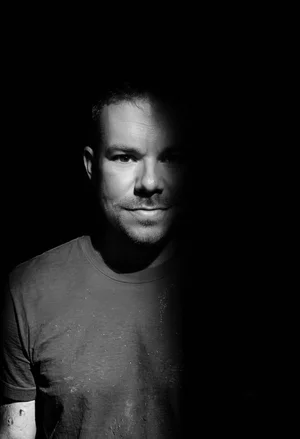
The Man by the River
He was forty. In the water’s gaze, he seemed older.
Benjamin arrived at the river an hour before dusk, the same as every evening, his boots tracing a path worn smooth by repetition. October had stripped the trees nearly bare, and the air carried the smell of woodsmoke from distant homes where people gathered around tables and spoke of ordinary things. He carried a thermos of coffee that had gone cold during his shift at the garage. Temperature had stopped mattering somewhere along the way.
The bench was always empty. This far from town, past where the walking path ended and the wild places began, people rarely came. But mostly it was just Benjamin and the river, and the space between them that held everything he couldn’t say aloud.
He sat, unscrewed the thermos, and let the bitter coffee settle on his tongue. The water moved like it always did—patient, relentless, indifferent to the weight people brought to its banks. The river didn’t ask questions. Didn’t look at the unit patch still sewn to his jacket and assume it knew anything about who he was or what he’d done.
His hand moved to his jacket pocket without thinking. The photograph was there, creased soft from years in his wallet, the edges worn from the unconscious habit of touching it. Two men in civilian clothes, arms draped across each other’s shoulders, grinning like they believed the world might actually be kind. The photo had been taken outside a restaurant on the coast, seven years ago—maybe eight. They’d driven there on a weekend pass, three hours from post and the weight of uniforms, just to feel what it was like to hold hands in public for five stolen minutes.
Alexander had laughed when the rain started, sudden and torrential. Had pulled Benjamin close right there on the sidewalk and kissed him like drowning was a choice they were making together. A stranger with a camera had asked if they wanted their picture taken, mistaking joy for permission to witness it.
Benjamin had almost said no. But Alexander had squeezed his hand and said yes, and for once, just once, Benjamin had let himself be visible.
A sound made him look up. The boy was coming down the path, fishing rod over his shoulder. Twelve, maybe thirteen, with that awkward in-between quality of someone not quite child anymore.
“Evening, Benjamin.”
“Evening, Caleb. Any luck yesterday?”
“Two catfish and a boot.” Caleb grinned. “Granddad says the boot’s probably worth more.”
“Your granddad’s a wise man.”
“He says you were in the Army. In the war.”
Benjamin took another sip of cold coffee. “I was.”
“Was it scary?”
“Sometimes,” he said. “Mostly it was hot and boring and loud. And then sometimes it wasn’t boring at all, and you wished it was.”
Caleb nodded, began sorting his tackle box. “My dad’s deployed. Third time. Mom says he’ll be home for Christmas, but she said that last year too.” He cast his line into the current. “You looking for something out here, Benjamin? At the river?”
The question landed heavier than it should have. “I don’t know, Caleb. Maybe I’m just sitting.”
“My granddad sits too. Says sometimes sitting’s all a man can do.”
They were quiet then. Benjamin unfolded the photograph fully, let himself really look at it for the first time in weeks. Alexander’s face, younger then. Benjamin’s own face, less gaunt, eyes that still held some light.
“That your brother?” Caleb asked, glancing over.
Benjamin almost said yes. “No. A friend. From the Army.”
“Must’ve been a good friend. You look happy.”
“I was.”
• • •
Benjamin learned three things in his first week on post—how to shine boots until they reflected your sins back at you, how to make a bed tight enough to bounce a quarter, and how to disappear in plain sight.
The disappearing was the most important skill, though nobody put it in the training manual.
He’d enlisted late, after four years of college that left him with a degree in history and the growing certainty that the civilian world had no place for someone like him. The Army offered structure, purpose, distance from his mother’s questions about girlfriends and grandchildren. Don’t Ask, Don’t Tell was the policy—you could be gay as long as you never said it, never acted on it, never let anyone see. In practice, it meant every conversation was a potential trap. Every friendship a risk.
He became a Forward Observer—the guy with the radio who called in artillery strikes, who turned coordinates into fire missions. Precision work. Required focus, mathematics, the ability to stay calm when everything around you was chaos. Required accepting that your voice on a radio could end lives or save them, and you rarely knew which until after.
It was a Friday night in June when everything changed. His roommates had convinced him to go out, and they ended up at a place called Alias, tucked into a strip mall on the boulevard near post. Everyone knew what it was. The gay bar. The place soldiers went when they were brave or desperate or both.
Benjamin should have said no. Instead, he followed his roommates inside.
He stood near the entrance, hands in his pockets, trying to make himself small. And that’s when he saw him. Across the room, near the bar. Tall, dark-haired, with the kind of posture that marked him as military even without a uniform. Laughing with genuine joy that made the whole room feel brighter.
The guy turned, as if feeling Benjamin’s stare, and their eyes met. The moment stretched. Then he started walking toward Benjamin with the easy confidence of someone who’d done this before.
“You don’t look like you want to be here,” the guy said.
“I’m a soldier. We’re trained to hate standing still.”
The guy’s smile widened. “Alexander Brennan. Same branch, though don’t hold that against me.”
They found two stools at the far end of the bar. Alexander ordered beers, paid before Benjamin could reach for his wallet. He was military legal—and he talked with an openness that made Benjamin feel exposed and safe at the same time.
“I’m tired of being invisible, Benjamin,” Alexander said quietly, and the honesty of it hit like a physical thing.
“How do you do it?” Benjamin asked. “Be here. Talk like this. Not worry about—”
“Who says I’m not worried? I’m terrified, actually. But I’m more terrified of spending my whole life hiding, of being eighty years old and realizing I never actually lived.” Alexander looked at him. “Don’t you ever get tired of it? The hiding?”
“Every day.”
“Then maybe tonight, just for a few hours, we don’t hide.”
They talked for hours. About deployments and books and the strange liminal space of being soldiers who couldn’t fully be soldiers. When the bar thinned out, Alexander said, “Come home with me. I have a decent couch and terrible coffee and I really don’t want this conversation to end.”
Benjamin should have said no. Instead, he said, “Okay.”
That night, on Alexander’s couch with mismatched mugs between them, Benjamin said things he’d never said aloud. And when Alexander took his hand, tentative at first, then sure, something shifted—some fundamental piece of Benjamin’s understanding of what his life could be.
They fell asleep fitted together in the dark, and Benjamin felt something he hadn’t felt since before he’d enlisted. Hope. The kind that was dangerous and necessary in equal measure.
• • •
Six months later, they got an apartment together. Two bedrooms—because that’s what roommates would have—though they shared one and used the other for plausible deniability.
The routines developed gradually. Benjamin woke first, always, made coffee, watched the sun rise through their kitchen window. Then Alexander would emerge, disheveled and squinting, and they’d sit at their tiny table reading news on their phones, ankles hooked together underneath.
They established rules. No affection in public. Separate cars. Always “roommate,” never anything more. They hosted barbecues where they maintained appropriate distance, created a social life that looked entirely platonic from outside.
But inside their apartment, they built something real. They cooked together, watched movies, read in companionable silence. They got a dog—Bandit, a rescue mutt—who gave them cover for being seen together in public. Just two roommates sharing pet ownership.
On weekends they’d drive to the coast. In winter, when the beaches were empty, they could risk more—quick kisses behind the dunes, hands clasped in the surf.
It was on one of those trips that Alexander said, “If things were different—if we didn’t have to hide—I’d want to marry you.”
Benjamin’s heart kicked against his ribs. “Doesn’t that scare you? The permanence?”
“Of course. But I’m more scared of spending my whole life playing it safe.”
“Ask me again,” Benjamin said. “When it’s legal. When we don’t have to hide.”
“Is that a yes?”
“It’s a probably. Which is the best I can do right now.”
Alexander’s smile was soft and understanding. “I’ll take a probably.”
Then the deployment orders came. Afghanistan. Nine months. Benjamin told Alexander in their living room, and Alexander pulled him into a hug—tight and desperate and everything Benjamin needed.
“Come home to me,” Alexander whispered. “That’s all I ask.”
“I promise.”
• • •
Afghanistan in January was cold in ways that surprised people who thought deserts were always hot. Benjamin sat in a sandbag bunker on a hilltop, watching the valley below through night-vision binoculars, three weeks in-country, twenty-three to go.
Communication with Alexander came in fits and starts. Stilted phone calls where they compressed weeks into minutes. Emails coded in careful language—“I miss my roommate” meaning I love you.
The fire mission came in March. A patrol ambushed in a village. Benjamin ran the calculations, confirmed coordinates, called it in with the calm precision years of training had ingrained. The shells landed exactly where he’d aimed. The enemy fire stopped. Success by any military metric.
But through his binoculars, he saw movement in the rubble. Someone crawling from the destroyed building. Then another. Then a third—small, child-sized.
The after-action report would say the building had been occupied by fighters using a family as human shields. Would say the mission was justified. Would say Benjamin had saved American lives.
The report wouldn’t mention the child who didn’t survive the medevac flight.
That night, Benjamin tried to write to Alexander. Settled on—Bad day. Can’t talk about it. Miss you.
Alexander’s response: I’m sorry. I wish I could help.
Benjamin read it and felt the distance like a physical thing. The gap between wishing and helping. He didn’t respond. Couldn’t find words that didn’t feel like lies.
After that, Alexander’s emails slowed. The tone shifted—more general, less intimate. Benjamin told himself it was natural. But at night he’d reread old messages, trying to pinpoint when exactly things began falling apart.
He pulled out his journal and wrote: 41S 707315 3547410. This is where I lost something I can’t name. This is the coordinate I’ll carry home.
And halfway around the world, Alexander woke alone in their bed, reached for someone who wasn’t there, and wondered when exactly he’d started preparing himself for Benjamin not to come home.
• • •
He came home in September to an apartment that smelled like someone else’s cleaning products and a dog who didn’t recognize him at first. Alexander was waiting, but the man who stood in their living room wasn’t quite the man who’d whispered come home to me nine months before. Something had rearranged behind his eyes.
They tried. For three months they tried—Benjamin carrying coordinates he couldn’t share, Alexander carrying loneliness that had calcified into something harder. They slept in the same bed but faced opposite walls. Made coffee in the same kitchen but at different hours. The distance that had been geographic became architectural, built into the structure of their days.
The note appeared in November, on the kitchen counter, written in Alexander’s careful hand. It said all the right things about distance and timing and how love sometimes isn’t enough when the waiting becomes its own kind of war. He signed it with his full name, as if they’d only ever been colleagues.
Benjamin read it standing in their kitchen—Alexander’s kitchen now, or nobody’s—and felt something close down inside him with the precision of a well-called fire mission. Clean. Total. Exactly on target.
He packed in an hour. Military life taught you to travel light.
• • •
Now the sun touched the horizon, and Caleb was packing up his gear.
“Benjamin? You okay?”
Benjamin realized he’d been staring at the water too long. “I’m fine, Caleb. You heading home?”
“Yeah. Granddad’ll worry.” The boy hesitated. “My granddad also says—” He stopped, seemed to reconsider. “Never mind. See you tomorrow, Benjamin.”
“See you tomorrow.”
Caleb disappeared up the path, and Benjamin was alone again with the river and the gathering dark. He unscrewed the thermos, drank the last of the coffee, folded the photograph back into his pocket.
There was something about this hour that made the past feel closer than the present. As if he could reach back through the years and find Alexander still there, still whole, still his. But the river knew better. The river had seen enough men sit on its banks with their ghosts to know that the past was another country entirely.
He wondered where Alexander was now. If he ever thought about that night in the rain. If he ever came to his own river at dusk, carrying his own photograph, looking for something he couldn’t name.
Benjamin stayed until the stars appeared, until the cold worked through his jacket, until the only light came from distant houses and the memory of brass-red sunsets that bled across the sky like wounds that never quite healed.
Then he stood, bones creaking with more than just forty years, and walked the path back to town, back to his room above the garage, back to the life he’d built from the pieces that remained.
The river would still be there tomorrow.
It was always there tomorrow.
And so, until he wasn’t, was he.
Continue Reading
The Party for One
A story about connection, vulnerability, and learning to ask for more.
Once Upon a Time
A story about love, heartbreak, and what remains after someone leaves.
The Weight of Other People’s Weather
A story about emotional distance, friendship, and what we carry for others.